Digital Currencies in 2026: US Investment Outlook
Anúncios
The 2026 investment outlook for digital currencies for US holders is characterized by a complex interplay of regulatory frameworks, technological breakthroughs, and shifting market dynamics, necessitating informed decision-making.
Anúncios
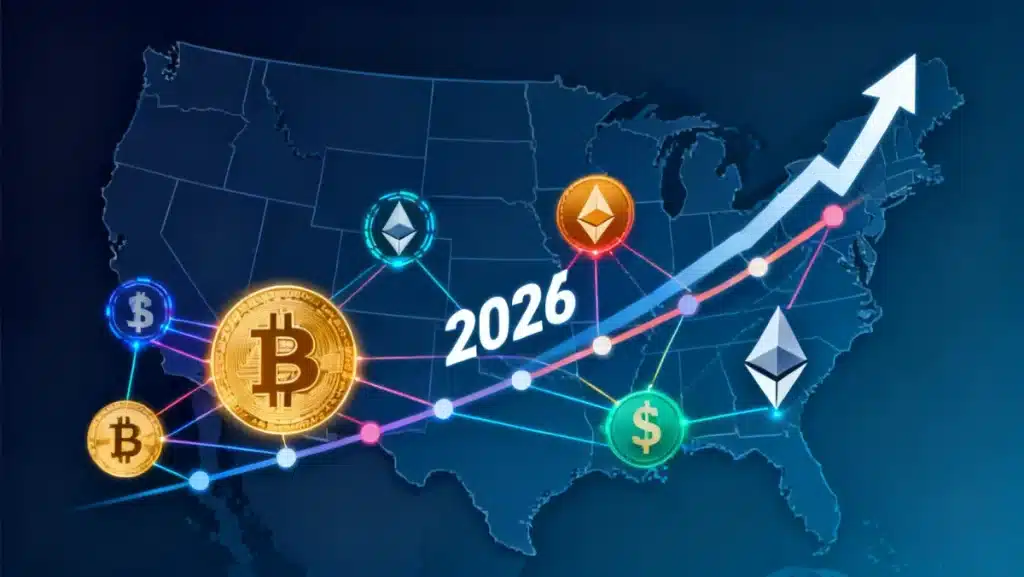
As we approach 2026, the landscape of digital currencies in 2026: a 12-month investment outlook for US holders continues its rapid evolution. This coming year promises significant developments that will undoubtedly reshape investment strategies for those in the United States. From regulatory shifts to technological innovations, understanding these forces is crucial for navigating the opportunities and risks inherent in the digital asset space.
Understanding the Evolving Regulatory Landscape in 2026
The regulatory environment surrounding digital currencies in the United States is arguably one of the most critical factors influencing their investment outlook for 2026. While previous years have seen a patchwork of approaches, 2026 is anticipated to bring greater clarity and potentially more unified federal oversight. This could significantly impact how digital assets are classified, traded, and taxed, directly affecting investor confidence and market stability.
Anúncios
Policy discussions are expected to intensify, focusing on consumer protection, market integrity, and preventing illicit financial activities. The Securities and Exchange Commission (SEC), Commodity Futures Trading Commission (CFTC), and other federal agencies are likely to collaborate more closely, aiming to establish a comprehensive framework. This framework might involve clearer guidelines for stablecoins, DeFi platforms, and NFTs, which have previously operated in a more ambiguous legal space.
Potential Regulatory Frameworks and Their Impact
- Clarity for Stablecoins: New legislation or regulatory guidance could define stablecoins as either securities or commodities, or establish a unique regulatory category, impacting their issuance and trading.
- DeFi Oversight: Regulators may seek to bring decentralized finance (DeFi) protocols under stricter scrutiny, potentially requiring KYC/AML compliance for certain operations.
- NFT Taxation and Classification: Clearer rules regarding the taxation of non-fungible tokens (NFTs) and their classification as art, collectibles, or securities are expected.
The outcome of these regulatory discussions will profoundly influence institutional adoption. A clear and predictable regulatory environment is often cited by traditional financial institutions as a prerequisite for deeper engagement with digital assets. For US holders, this means potentially more secure and regulated avenues for investment, but also increased compliance burdens for participants in the ecosystem.
Technological Advancements Driving Digital Asset Innovation
Beyond regulation, technological innovation remains a relentless driver in the digital currency space. In 2026, we expect to see further maturation of existing blockchain technologies and the emergence of new paradigms. These advancements will not only enhance the utility and scalability of digital assets but also open up novel investment opportunities for US holders.
Improvements in scalability solutions, such as Layer 2 protocols and sharding, will continue to address transaction speed and cost issues on major blockchains like Ethereum. This will make decentralized applications (dApps) more user-friendly and accessible, fostering greater adoption across various sectors. Furthermore, interoperability solutions, allowing different blockchains to communicate seamlessly, will become more robust, creating a more interconnected digital asset ecosystem.
Key Technological Trends to Watch
- Zero-Knowledge Proofs (ZKPs): Increased integration of ZKPs to enhance privacy and scalability, particularly in DeFi and enterprise blockchain solutions.
- Quantum Resistance: Ongoing research and initial implementations of quantum-resistant cryptographic algorithms to safeguard digital assets against future quantum computing threats.
- Web3 Infrastructure: Continued development of decentralized storage, identity, and computing layers forming the backbone of the next generation of the internet.
The convergence of artificial intelligence (AI) with blockchain technology is another area ripe for innovation. AI could be used to optimize trading algorithms, enhance security protocols, and even create more sophisticated smart contracts. These technological leaps are not just theoretical; they are actively being developed and deployed, promising to make digital currencies more efficient, secure, and integrated into our daily lives, thus improving their overall investment appeal.
Macroeconomic Influences and Market Dynamics for US Investors
The global macroeconomic environment will continue to exert significant influence on the performance of digital currencies in 2026. Factors such as inflation rates, interest rate policies by the Federal Reserve, geopolitical events, and the overall health of the US and global economies will shape investor sentiment and capital flows into digital assets.
Should inflation persist or re-emerge as a major concern, some investors may turn to digital currencies, particularly Bitcoin, as an inflation hedge, similar to gold. Conversely, a tightening monetary policy with rising interest rates could reduce liquidity in financial markets, potentially dampening speculative investments in riskier assets like cryptocurrencies. US holders must closely monitor these macroeconomic indicators to position their portfolios effectively.
The correlation between digital assets and traditional financial markets, such as the stock market, also remains a critical dynamic. While digital currencies were once seen as uncorrelated assets, recent years have shown increasing convergence, especially during periods of market stress. Understanding this evolving correlation will be key to diversified portfolio management.
The Rise of Central Bank Digital Currencies (CBDCs) and Their Implications
Central Bank Digital Currencies (CBDCs) are poised to become a more prominent feature in the global financial landscape by 2026, with the United States actively exploring a potential digital dollar. The introduction of a US CBDC could have profound implications for the existing digital currency ecosystem and for US holders.
A digital dollar could streamline domestic and international payments, reduce transaction costs, and enhance financial inclusion. However, its design principles—whether it’s interest-bearing, privacy-preserving, or intermediated—will determine its impact on commercial banks and the broader financial system. For private digital currencies, a CBDC could either act as a competitor, drawing liquidity away, or as a catalyst, legitimizing the underlying blockchain technology and fostering broader digital asset adoption.
Potential Impacts of a US CBDC
- Increased Legitimacy: A government-backed digital currency could enhance the perception of digital assets as a legitimate financial instrument.
- Competition for Stablecoins: A digital dollar might compete directly with private stablecoins, potentially reducing their market share or forcing innovation.
- Infrastructure Development: The development of CBDC infrastructure could indirectly benefit other digital asset technologies through shared innovation or regulatory clarity.
US holders should consider how a digital dollar might integrate with existing digital asset platforms and services. Its implementation could accelerate the development of digital wallets and payment systems, creating new opportunities for interoperability and integration within the broader digital economy. This shift could also push private cryptocurrencies to differentiate themselves more clearly by offering unique features like true decentralization or enhanced privacy.
Decentralized Finance (DeFi) and Non-Fungible Tokens (NFTs) in 2026
Decentralized Finance (DeFi) and Non-Fungible Tokens (NFTs) have captivated significant attention in recent years, and their evolution in 2026 will be crucial for US investors. DeFi, with its promise of democratizing financial services, is expected to mature further, offering more robust and user-friendly applications. NFTs, while experiencing market corrections, are likely to find more tangible utility beyond speculative art, integrating into gaming, real estate, and digital identity.
In DeFi, we anticipate continued innovation in lending protocols, decentralized exchanges (DEXs), and synthetic assets. The focus will shift towards greater capital efficiency, enhanced security audits, and improved oracle solutions to ensure reliable data feeds. Regulatory clarity, as discussed earlier, will be vital for DeFi’s mainstream adoption, as institutional players require a predictable legal framework to participate.
DeFi and NFT Sector Outlook
- DeFi Security Enhancements: Expect more sophisticated security measures and insurance protocols to mitigate risks associated with smart contract vulnerabilities.
- NFT Utility Expansion: NFTs will move beyond digital art to represent real-world assets, intellectual property, and verifiable credentials, driving new use cases.
- Cross-Chain DeFi: Increased development of cross-chain DeFi solutions to unlock liquidity and functionality across different blockchain networks.
For NFTs, the market will likely differentiate between projects offering genuine utility and those driven purely by hype. Brands and creators will continue to explore NFTs as a tool for community building and fan engagement, while enterprises may leverage them for supply chain management or tokenized ownership. US holders should conduct thorough due diligence, focusing on projects with clear roadmaps, strong communities, and demonstrable value propositions to navigate these evolving sectors.
Strategic Investment Approaches for US Holders in 2026
Given the multifaceted dynamics shaping the digital currency landscape, US holders will need to adopt strategic and adaptive investment approaches in 2026. Diversification, risk management, and continuous education will be paramount to capitalize on opportunities while mitigating potential downsides.
A balanced portfolio might include established assets like Bitcoin and Ethereum, which have demonstrated resilience and growing institutional acceptance. However, it should also consider carefully vetted altcoins that address specific market needs or offer significant technological advancements. Investing in emerging sectors like Web3 infrastructure tokens or niche DeFi protocols could offer higher growth potential, albeit with increased risk.
Key Investment Strategies
- Dollar-Cost Averaging (DCA): Consistently investing a fixed amount over time to reduce the impact of market volatility.
- Thorough Research: Deep dive into project fundamentals, team, technology, and tokenomics before making any investment.
- Portfolio Rebalancing: Periodically adjusting asset allocations to maintain desired risk levels and capitalize on market shifts.
Risk management strategies, such as setting stop-loss orders and not over-allocating capital to highly speculative assets, are essential. Furthermore, staying informed about regulatory changes, technological breakthroughs, and macroeconomic trends will enable US investors to make timely adjustments to their portfolios. The digital asset market is dynamic, and a proactive, informed approach will be key to success in 2026.
| Key Aspect | 2026 Outlook for US Holders |
|---|---|
| Regulatory Clarity | Expected to improve, potentially leading to increased institutional adoption and market stability. |
| Technological Innovation | Scalability, privacy (ZKPs), and Web3 infrastructure will continue to advance, enhancing utility. |
| CBDC Development | US exploring digital dollar, impacting private stablecoins and overall digital asset legitimacy. |
| DeFi & NFTs | Maturation towards greater utility, security, and integration with real-world assets. |
Frequently Asked Questions About Digital Currencies in 2026
New US regulations in 2026 are expected to bring greater clarity to digital asset classifications and trading. This could lead to increased institutional adoption and market stability, but also potentially stricter compliance requirements for investors and platforms. Staying informed on these developments will be crucial for strategic adjustments.
US investors should monitor advancements in blockchain scalability (Layer 2s), privacy-enhancing technologies (ZKPs), and Web3 infrastructure. These innovations will improve transaction efficiency, security, and the overall utility of digital assets, opening new investment avenues and increasing mainstream adoption.
A US CBDC could impact crypto holdings by legitimizing digital assets, potentially increasing overall market acceptance. However, it might also introduce competition for private stablecoins. Its effect depends heavily on its design and integration with existing financial systems and blockchain platforms, creating both opportunities and challenges.
Yes, DeFi and NFTs remain viable for US holders, but with an emphasis on utility and fundamental value. DeFi protocols are expected to enhance security and efficiency, while NFTs will expand beyond art into real-world applications like gaming and digital identity. Careful research into project fundamentals is more critical than ever.
For digital currencies in 2026, US holders should consider diversification across established and emerging assets, dollar-cost averaging, and continuous education. Implementing robust risk management strategies, such as setting clear investment goals and not over-leveraging, will be crucial for navigating market volatility and maximizing potential returns effectively.
Conclusion
The 12-month investment outlook for US holders in digital currencies for 2026 is marked by both significant potential and inherent complexities. The confluence of evolving regulatory frameworks, relentless technological innovation, macroeconomic shifts, and the maturation of specific sectors like DeFi and NFTs will define the investment landscape. Success in this dynamic environment will hinge on informed decision-making, strategic portfolio management, and a commitment to continuous learning. As the digital economy continues to integrate into mainstream finance, understanding these forces will be key to navigating the opportunities presented by digital assets in the coming year.