2026 Agricultural Policy Updates: New Farm Bill Provisions Explained
Anúncios
The 2026 Farm Bill introduces pivotal policy shifts affecting commodity programs, conservation, and risk management for American farmers, aiming to stabilize incomes and promote sustainable practices.
As the agricultural landscape continually evolves, understanding the implications of the upcoming 2026 Farm Bill Provisions is paramount for every American farmer. This legislative package, a cornerstone of U.S. agricultural policy, shapes everything from crop insurance to conservation efforts. What changes can farmers anticipate, and how will these new provisions impact their operations and livelihoods?
Anúncios
Understanding the Foundation of the Farm Bill
The Farm Bill is a comprehensive, multi-year piece of legislation that governs various agricultural and food programs in the United States. It’s typically reauthorized every five years, making the 2026 iteration a critical juncture for the industry. This bill doesn’t just impact farmers; it touches rural development, food assistance programs, and even international trade, making its provisions far-reaching and complex.
Anúncios
Historically, Farm Bills have evolved to address the most pressing issues of their time, from dust bowl conservation efforts to modern-day climate resilience. The 2026 version is expected to continue this trend, with a strong focus on sustainability, market stability, and ensuring the viability of American agriculture in a globalized economy.
Key pillars of previous farm bills
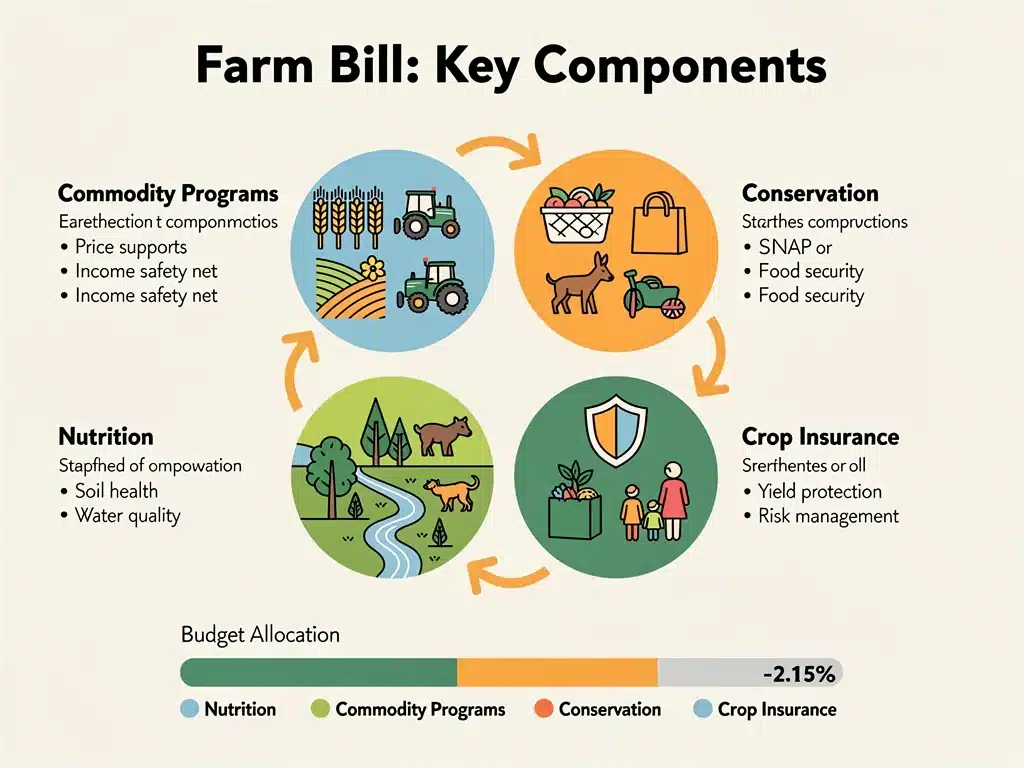
Previous Farm Bills have consistently revolved around several core pillars, which are expected to be refined and updated in the 2026 version. These pillars provide a framework for understanding the legislative priorities and their potential impact.
- Commodity Programs: Direct payments, price loss coverage (PLC), and agricultural risk coverage (ARC) for staple crops.
- Conservation: Programs like the Conservation Reserve Program (CRP) and Environmental Quality Incentives Program (EQIP) promoting environmental stewardship.
- Crop Insurance: Subsidized insurance to protect farmers from natural disasters and market fluctuations.
- Nutrition Programs: Funding for food stamps (SNAP) and other food assistance initiatives.
The upcoming legislation will likely build upon these foundations, introducing new mechanisms and adjusting existing ones to better suit the contemporary challenges faced by farmers, such as climate change, volatile markets, and evolving consumer demands. Understanding these historical underpinnings is crucial for appreciating the significance of the 2026 changes.
Commodity Programs: Adjustments and Implications
One of the most significant aspects of any Farm Bill lies in its commodity programs, which provide a safety net for producers of major agricultural commodities. The 2026 Farm Bill is anticipated to bring substantial adjustments to these programs, aiming to enhance their effectiveness and equity. These changes will directly influence the financial stability and planting decisions of countless farmers across the nation.
Discussions around the new bill suggest a potential recalibration of reference prices for Price Loss Coverage (PLC) and Agricultural Risk Coverage (ARC). Current reference prices, often based on historical data, may not adequately reflect the increased costs of production and market volatility experienced in recent years. Adjusting these prices upwards could provide a more robust safety net, especially for farmers dealing with low commodity prices.
Potential changes to reference prices
The debate over reference prices is central to the commodity title. Farmers and agricultural advocacy groups have consistently argued for updates that reflect current economic realities. An increase in reference prices would mean higher potential payments under PLC, offering greater protection when market prices fall below a certain threshold.
- Increased financial stability: Higher reference prices can reduce income variability for farmers.
- Incentive for planting certain crops: Adjustments may subtly influence planting decisions, potentially favoring crops with stronger safety nets.
- Budgetary considerations: Any increase in reference prices will have significant implications for the federal budget, a key point of contention in legislative negotiations.
Beyond reference prices, there might be modifications to how ARC payments are calculated. The ARC program, which provides revenue protection, could see changes to its benchmark yields or revenue calculations, aiming for more accurate reflections of local conditions and actual losses. These adjustments are critical for ensuring that the programs truly serve their purpose of mitigating risk for farmers.
Enhanced Conservation and Environmental Stewardship
The 2026 Farm Bill is poised to place an even greater emphasis on conservation and environmental stewardship, reflecting growing concerns about climate change, soil health, and water quality. Farmers are increasingly recognized as key players in addressing these challenges, and the new provisions are expected to offer more robust support for sustainable practices.
Programs like the Conservation Reserve Program (CRP), which pays farmers to take environmentally sensitive land out of production, may see expanded acreage caps and increased payment rates. This would encourage more farmers to participate, leading to greater environmental benefits such as reduced soil erosion, improved water quality, and enhanced wildlife habitats.
New initiatives for climate resilience
A significant focus is expected on initiatives designed to build climate resilience within the agricultural sector. This could include new funding streams or expanded eligibility for practices that sequester carbon, reduce greenhouse gas emissions, and adapt to changing weather patterns.
- Carbon sequestration incentives: Programs encouraging practices like cover cropping and no-till farming.
- Water management projects: Support for efficient irrigation systems and water conservation technologies.
- Renewable energy development: Grants and loans for on-farm renewable energy projects.
The Environmental Quality Incentives Program (EQIP) and the Conservation Stewardship Program (CSP) are also likely candidates for increased funding and revised criteria. These programs provide financial and technical assistance for farmers to implement conservation practices. The goal is to make these programs more accessible and effective, ensuring that a broader range of farmers can adopt sustainable methods without undue financial burden.
Risk Management and Crop Insurance Innovations
For many farmers, crop insurance is the most vital safety net against the unpredictable nature of agriculture. The 2026 Farm Bill is anticipated to introduce innovations in risk management and crop insurance, aiming to provide more comprehensive and flexible coverage options. These changes are crucial for helping farmers navigate increasing weather volatility and market uncertainties.
One area of focus is likely to be the expansion of coverage options for specialty crops and underserved producers. While traditional commodity crops have robust insurance options, specialty crop growers often face gaps in coverage. The new bill could address this by developing tailored insurance products that better meet the unique risks associated with these diverse crops.
Addressing climate-related risks
Climate change poses a growing threat to agricultural production, with more frequent and intense extreme weather events. The 2026 Farm Bill is expected to incorporate provisions that specifically address these climate-related risks within the crop insurance framework.
- Enhanced coverage for drought and flood: New mechanisms to better compensate for losses due to prolonged drought or severe flooding.
- Data-driven risk assessment: Utilizing advanced climate data and modeling to refine insurance products and premiums.
- Premium subsidies for climate-resilient practices: Potentially offering lower premiums for farmers who adopt practices that reduce their vulnerability to climate impacts.
Furthermore, there may be efforts to simplify the enrollment process and improve the accessibility of crop insurance programs, particularly for small and beginning farmers. Bureaucratic hurdles can often deter participation, and streamlining these processes could ensure that more producers benefit from these essential risk management tools. The goal is a more resilient agricultural sector, better equipped to handle future challenges.
Impact on Beginning and Underserved Farmers
A significant objective of the 2026 Farm Bill is to foster a more inclusive and equitable agricultural sector. This means placing a strong emphasis on supporting beginning farmers, military veteran farmers, and other underserved groups who often face unique barriers to entry and success. The new provisions are expected to offer targeted assistance designed to help these producers thrive.
Access to land, capital, and technical assistance are perennial challenges for new and underserved farmers. The Farm Bill could introduce enhanced loan programs, grants for land acquisition, and improved access to credit through the Farm Service Agency (FSA). These financial tools are critical for helping these farmers establish and grow their operations.
Expanding access to resources and training
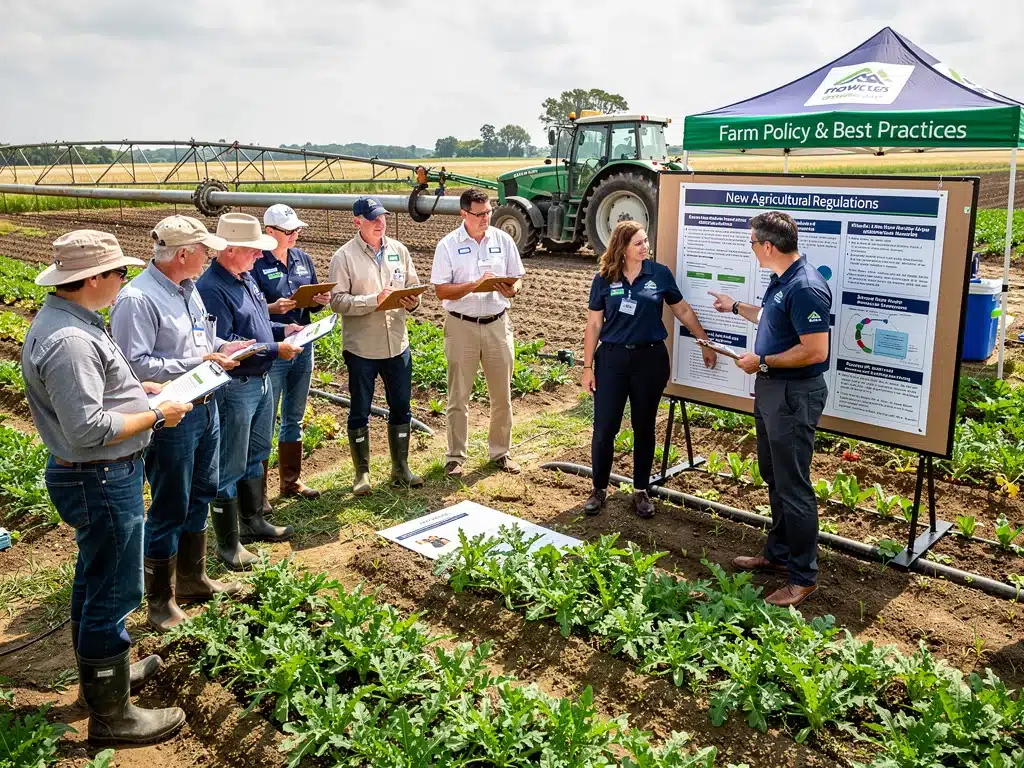
Beyond financial support, the bill is likely to expand programs that provide vital resources and training. Mentorship programs, extension services, and educational initiatives are crucial for equipping new farmers with the knowledge and skills needed to succeed in a complex industry.
- Increased funding for beginning farmer and rancher development programs: Supporting mentorship and educational opportunities.
- Technical assistance for sustainable practices: Providing expert guidance on adopting environmentally friendly farming methods.
- Outreach to socially disadvantaged farmers: Ensuring that information and resources reach all eligible producers.
Another key area of focus will be on reducing administrative burdens and making existing programs more user-friendly for these groups. Simplifying application processes and providing dedicated support staff can make a substantial difference in uptake and effectiveness. The overall aim is to create a more diverse and resilient agricultural community by lowering barriers and promoting equitable opportunities.
Market Access and Rural Development Initiatives
Beyond direct farm support, the 2026 Farm Bill is expected to include robust provisions aimed at enhancing market access for agricultural products and fostering economic development in rural communities. These initiatives are vital for ensuring that farmers can effectively sell their goods and that rural areas remain vibrant and prosperous.
One focus will likely be on strengthening local and regional food systems. This could involve increased funding for programs that connect producers directly with consumers, such as farmers’ markets and community-supported agriculture (CSA) initiatives. Support for food hubs and processing facilities could also help farmers capture more value from their products.
Promoting trade and export opportunities
In an increasingly globalized economy, promoting international trade and export opportunities is crucial for American agriculture. The Farm Bill is expected to include measures that support farmers in accessing new markets and expanding their presence in existing ones.
- Funding for market development programs: Assisting producers in navigating international trade regulations and cultural preferences.
- Export credit guarantees: Reducing financial risk for exporters and encouraging international sales.
- Addressing trade barriers: Advocating for policies that remove obstacles to fair trade for U.S. agricultural products.
Rural development initiatives will also be a significant component, with potential investments in infrastructure, broadband internet access, and business development programs. Reliable broadband is increasingly essential for modern farming operations and for connecting rural businesses to broader markets. These investments aim to create jobs, attract new residents, and improve the quality of life in rural America, ensuring its long-term viability.
Anticipated Challenges and Future Outlook
While the 2026 Farm Bill holds immense promise for American agriculture, its passage and implementation will undoubtedly face several challenges. Navigating political complexities, budgetary constraints, and diverse stakeholder interests will be critical to shaping a bill that genuinely serves the needs of farmers and the broader public.
One of the primary challenges will be securing adequate funding. Agricultural programs are expensive, and balancing the needs of commodity support, conservation, and nutrition programs within a constrained federal budget will require difficult decisions. Lawmakers will need to find common ground to ensure that essential programs are adequately resourced without overburdening taxpayers.
Political landscape and stakeholder interests
The legislative process is inherently political, and the Farm Bill is no exception. Diverse interests from various agricultural sectors, environmental groups, food security advocates, and consumer organizations will all vie for influence. Reconciling these often-conflicting priorities will be a delicate balancing act.
- Commodity groups: Advocating for strong safety nets and market support.
- Conservationists: Pushing for increased funding and stricter environmental standards.
- Nutrition advocates: Emphasizing the importance of food assistance programs.
Despite these challenges, the outlook for the 2026 Farm Bill remains cautiously optimistic. There is a broad recognition of the importance of a robust and sustainable agricultural sector for national food security and economic stability. Bipartisan efforts will be essential to craft a bill that provides meaningful support to farmers, promotes environmental stewardship, and ensures a resilient food system for the future. The next few years will be crucial in shaping the trajectory of American agriculture for years to come.
| Key Provision | Brief Description |
|---|---|
| Commodity Program Adjustments | Potential updates to reference prices and ARC/PLC calculations for enhanced farmer safety nets. |
| Enhanced Conservation | Increased funding and expanded eligibility for programs promoting soil health and climate resilience. |
| Crop Insurance Innovations | New coverage options for specialty crops and tailored solutions for climate-related risks. |
| Support for Underserved Farmers | Targeted financial aid, land access, and training programs for beginning and socially disadvantaged producers. |
Frequently Asked Questions About the 2026 Farm Bill
The primary purpose of the 2026 Farm Bill is to reauthorize and update comprehensive legislation governing agricultural and food policies in the United States. It aims to provide a safety net for farmers, promote conservation, ensure food security, and support rural development through various programs and funding mechanisms.
Commodity programs are expected to see adjustments in reference prices for Price Loss Coverage (PLC) and Agricultural Risk Coverage (ARC). These changes aim to better reflect current production costs and market realities, offering more robust income protection for farmers of staple crops against price volatility and revenue declines.
The 2026 Farm Bill is expected to enhance conservation efforts by expanding programs like CRP and EQIP. It will likely introduce new initiatives for climate resilience, offering incentives for practices such as carbon sequestration, improved water management, and renewable energy development on farms to promote environmental stewardship.
Yes, there is an anticipation that the 2026 Farm Bill will introduce innovations in crop insurance, including expanded coverage options for specialty crops. The goal is to provide more tailored and comprehensive risk management tools that address the unique challenges faced by producers of diverse and less traditional agricultural products.
The 2026 Farm Bill aims to support beginning and underserved farmers through enhanced loan programs, grants for land acquisition, and improved access to credit. It will also likely expand funding for mentorship programs, technical assistance, and educational initiatives to help these groups overcome barriers and succeed in agriculture.
Conclusion
The 2026 Farm Bill Provisions represent a critical legislative undertaking that will profoundly shape the future of American agriculture. From refining commodity programs to championing enhanced conservation efforts, innovating risk management, and prioritizing support for beginning and underserved farmers, this bill is designed to address the multifaceted challenges and opportunities facing the sector. While budgetary constraints and diverse stakeholder interests present inherent complexities, the overarching goal remains to foster a resilient, sustainable, and equitable agricultural system. Farmers, policymakers, and consumers alike will watch closely as these provisions take shape, setting the course for food production and rural prosperity for years to come. The proactive engagement of all parties will be key to ensuring a Farm Bill that truly serves the nation’s agricultural needs.