AI’s Impact on US Education: Workforce Prep for 2026 & Beyond
Anúncios
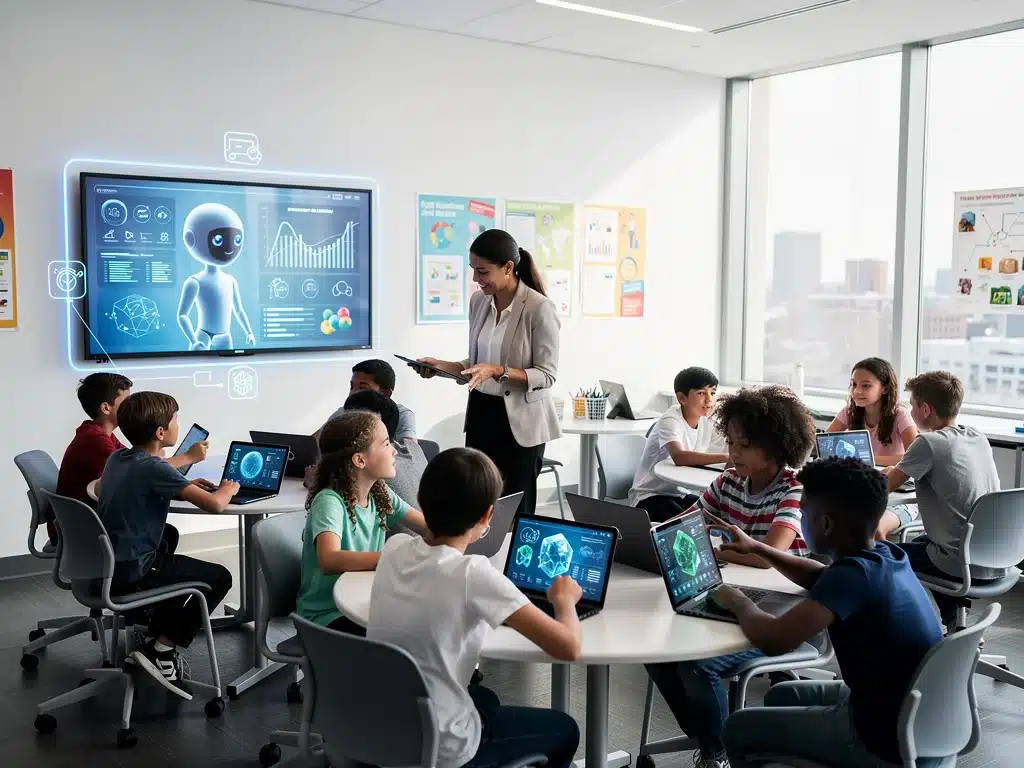
Artificial intelligence is profoundly reshaping US education, demanding new pedagogical approaches and curriculum adjustments to equip students with the essential skills for the rapidly evolving workforce of 2026 and beyond.
Anúncios
The advent of artificial intelligence (AI) is not merely a technological shift; it is a fundamental transformation impacting every facet of society, with profound implications for the educational landscape in the United States. Understanding the impact of AI on US education: preparing students for the workforce of 2026 and beyond is crucial for educators, policymakers, parents, and students alike. This evolving paradigm necessitates a reimagining of curricula, teaching methodologies, and the very skills we deem essential for future generations.
Anúncios
redefining education for the AI era
The integration of artificial intelligence into daily life and industry demands a re-evaluation of educational goals. Traditional rote learning and memorization are becoming increasingly obsolete as AI can perform these tasks with unparalleled efficiency. The focus must now shift towards fostering uniquely human capabilities that AI cannot replicate, at least not yet. This includes critical thinking, creativity, complex problem-solving, emotional intelligence, and ethical reasoning.
Educators are tasked with designing learning experiences that cultivate these higher-order skills. This often means moving away from standardized tests as the sole measure of success and embracing project-based learning, collaborative tasks, and real-world problem simulations. The classroom transforms into a dynamic environment where students are active participants in their learning journey, guided by instructors who act more as facilitators than lecturers.
curriculum transformation and skill development
Curriculum development in the AI era is undergoing significant changes. Schools are beginning to incorporate AI literacy, data science fundamentals, and computational thinking into their core subjects, not just as electives. This ensures that all students, regardless of their chosen path, possess a foundational understanding of the technologies shaping their world.
- AI Literacy: Understanding how AI works, its capabilities, and its limitations.
- Data Science Fundamentals: Basic data analysis, interpretation, and ethical use of data.
- Computational Thinking: Deconstructing problems, pattern recognition, and algorithmic design.
- Ethical AI: Discussing the societal implications, biases, and responsible development of AI.
Beyond technical skills, the emphasis is also on fostering adaptability and a growth mindset. The future workforce will require individuals who can continuously learn, unlearn, and relearn as technology evolves. This proactive approach to skill development is vital for navigating the uncertainties of an AI-driven job market. The education system must instill a lifelong love of learning, preparing students not just for a first job, but for a career path that will undoubtedly involve constant evolution.
In conclusion, redefining education for the AI era means a holistic shift from content delivery to skill development, emphasizing human-centric attributes and a continuous learning mindset. This transformation is fundamental to preparing students for the complexities and opportunities of the workforce in 2026 and beyond.
ai as a pedagogical tool: enhancing learning experiences
Artificial intelligence is not just changing what we teach, but also how we teach. AI-powered tools are revolutionizing pedagogical approaches, offering personalized learning experiences that were once unimaginable. These technologies can adapt to individual student needs, providing tailored content, feedback, and support, thereby enhancing engagement and academic outcomes.
Personalized learning, driven by AI, allows students to progress at their own pace and focus on areas where they need the most help. AI algorithms can identify learning gaps, recommend supplementary materials, and even suggest different teaching methods based on a student’s learning style. This level of customization ensures that every student receives the support necessary to thrive.
adaptive learning platforms and intelligent tutoring systems
Adaptive learning platforms are a prime example of AI’s transformative power in education. These systems continuously assess a student’s knowledge and adjust the curriculum in real-time. They can provide instant feedback, track progress, and predict areas where a student might struggle, allowing for proactive intervention.
- Personalized Content Delivery: Tailoring educational materials to individual learning speeds and preferences.
- Automated Assessment: Providing immediate feedback on assignments and quizzes, freeing up teacher time.
- Targeted Interventions: Identifying students at risk of falling behind and offering specific support.
Intelligent tutoring systems go a step further by mimicking the interaction of a human tutor. These systems can answer questions, explain concepts, and guide students through complex problems, often available 24/7. This not only supports students outside of traditional classroom hours but also provides invaluable assistance to teachers by offloading routine instructional tasks.
Furthermore, AI can analyze vast amounts of educational data to provide insights to educators. This data can help teachers understand classroom trends, identify effective teaching strategies, and make data-driven decisions to improve overall student performance. By leveraging AI as a powerful analytical tool, schools can continually refine their educational offerings.
In summary, AI as a pedagogical tool offers immense potential to enhance learning experiences through personalization, adaptive content, and intelligent support systems. This integration promises a more effective and equitable educational environment for all students.
equipping educators: professional development for the AI age
The successful integration of AI into US education hinges significantly on the preparedness of its educators. Teachers are at the forefront of this transformation, and without adequate training and support, the potential benefits of AI in the classroom may remain untapped. Professional development programs must evolve to equip educators with the knowledge and skills required to effectively leverage AI technologies and guide students in an AI-driven world.
These professional development initiatives should not only focus on the technical aspects of using AI tools but also on understanding the pedagogical shifts that AI necessitates. Teachers need to learn how to integrate AI into their lesson plans, interpret data from AI-powered platforms, and foster the critical thinking and ethical considerations surrounding AI among their students.
key areas of teacher training in AI
Training programs for educators must cover a broad spectrum of topics to ensure comprehensive preparedness. This includes understanding the fundamentals of AI, its applications in education, and its ethical implications. Practical workshops and collaborative learning opportunities can be particularly effective.
- AI Fundamentals: Basic concepts, algorithms, and how AI systems learn.
- AI Tool Proficiency: Hands-on training with educational AI software and platforms.
- Data Interpretation: Analyzing student performance data generated by AI for informed instructional decisions.
- Ethical Considerations: Discussing bias in AI, data privacy, and responsible AI use in the classroom.
- Curriculum Integration: Strategies for incorporating AI literacy and computational thinking into existing subjects.
Beyond formal training, creating communities of practice where educators can share experiences, best practices, and challenges related to AI integration is crucial. Peer learning and mentorship can significantly accelerate the adoption and effective use of AI in classrooms across the nation.
Furthermore, school districts and educational institutions must allocate sufficient resources for ongoing professional development. AI technology is constantly evolving, and teachers will require continuous learning opportunities to stay current with new tools and methodologies. Investing in educators is an investment in the future of education.
In conclusion, equipping educators with comprehensive professional development in AI is paramount for a successful transition into the AI age. This investment will empower teachers to harness AI’s potential, creating dynamic and future-ready learning environments.
challenges and ethical considerations in ai integration
While the potential benefits of AI in US education are vast, its integration is not without significant challenges and ethical considerations. Addressing these issues proactively is essential to ensure that AI serves to enhance education equitably and responsibly, rather than creating new disparities or compromising student well-being.
One primary challenge is the digital divide. Not all students have equal access to technology or reliable internet connectivity at home, which could exacerbate existing inequalities if AI-powered learning becomes a central component of education. Ensuring equitable access to AI tools and resources for all students, regardless of socioeconomic background, is a critical hurdle.
data privacy, bias, and equity
Data privacy is a paramount concern. AI systems often rely on collecting and analyzing vast amounts of student data, from academic performance to behavioral patterns. Safeguarding this sensitive information from breaches and misuse is crucial, requiring robust data protection policies and transparent practices. Parents and students must be fully informed about how their data is collected, stored, and utilized.
- Data Security: Implementing strong encryption and cybersecurity measures to protect student information.
- Transparency: Clearly communicating data collection and usage policies to all stakeholders.
- Parental Consent: Obtaining informed consent for data collection and use in AI applications.
Another significant ethical concern is algorithmic bias. AI systems are trained on existing data, and if this data reflects societal biases, the AI can perpetuate or even amplify these biases in its recommendations or assessments. This could lead to unfair outcomes for certain student demographics, making it imperative to develop and deploy AI tools that are rigorously tested for bias and designed for fairness.
Equity in access to high-quality AI education is also vital. Schools in affluent areas may have greater resources to invest in cutting-edge AI technologies and teacher training, potentially leaving students in under-resourced schools at a disadvantage. Policymakers must work to ensure that all educational institutions have the means to integrate AI effectively.
In conclusion, addressing the challenges of digital equity, data privacy, and algorithmic bias is fundamental to the responsible and effective integration of AI in US education. A thoughtful and ethical approach will ensure AI truly benefits all students.
preparing students for the workforce of 2026 and beyond
The workforce of 2026 and beyond will be fundamentally different from today’s, largely due to the pervasive influence of artificial intelligence. Education systems must proactively prepare students not just for existing jobs, but for roles that may not even exist yet. This requires a strong emphasis on future-proof skills, adaptability, and an entrepreneurial mindset.
Many routine and repetitive tasks will be automated by AI, shifting the demand towards jobs requiring creativity, critical thinking, complex problem-solving, and interpersonal skills. Students need to be equipped with the ability to collaborate with AI, leveraging its capabilities to enhance their own productivity and innovation.

essential skills for the AI-driven job market
Identifying and cultivating the right skills is paramount. Beyond technical proficiency in AI and data science, the future workforce will value uniquely human attributes that complement AI’s strengths. These include skills that facilitate human-AI collaboration and innovation.
- Critical Thinking: Analyzing information, evaluating arguments, and making reasoned judgments.
- Creativity and Innovation: Generating new ideas and solutions, thinking outside the box.
- Complex Problem-Solving: Tackling multifaceted issues with no clear-cut answers.
- Communication and Collaboration: Effectively working with diverse teams, including AI systems.
- Emotional Intelligence: Understanding and managing emotions in oneself and others.
- Digital Literacy and AI Ethics: Navigating digital environments responsibly and understanding AI’s societal impact.
Vocational and technical education programs also play a crucial role in this preparation. They must adapt to incorporate AI tools and techniques relevant to their respective industries, ensuring that graduates are ready for AI-enhanced trades and technical professions. Lifelong learning initiatives will be critical, as individuals will need to continuously upskill and reskill throughout their careers.
Furthermore, fostering an entrepreneurial spirit and resilience is vital. The ability to identify opportunities, take calculated risks, and adapt to change will be highly valued in a rapidly evolving job market. Education should encourage students to be creators and innovators, not just consumers, of technology.
In conclusion, preparing students for the workforce of 2026 and beyond involves a holistic approach to skill development, emphasizing uniquely human capabilities, adaptability, and a proactive engagement with AI technologies.
policy and funding: driving AI integration in education
The successful and equitable integration of AI into US education cannot happen without robust policy frameworks and adequate funding. Governmental bodies, educational institutions, and private sector partners must collaborate to create an environment conducive to innovation, ensuring that all students benefit from AI’s transformative potential.
Policymakers face the challenge of developing regulations that are flexible enough to adapt to rapidly evolving technology while also safeguarding student privacy and promoting equity. This includes setting standards for AI curriculum, teacher training, and the ethical use of AI tools in schools.
strategic investments and collaborative initiatives
Funding is a critical component. Investing in infrastructure, such as high-speed internet and necessary hardware, is foundational. Beyond that, significant investment is needed for developing and procuring AI-powered educational software, implementing comprehensive teacher training programs, and conducting research into the efficacy and impact of AI in various educational settings.
- Infrastructure Development: Ensuring universal access to robust internet and modern devices.
- Teacher Training Grants: Funding for professional development in AI literacy and pedagogy.
- AI Curriculum Development: Support for creating and implementing AI-focused educational content.
- Research and Development: Investigating the best practices and long-term effects of AI in education.
Public-private partnerships can play a pivotal role in accelerating AI integration. Technology companies can offer their expertise, resources, and platforms to schools, while educational institutions provide valuable insights into pedagogical needs and classroom realities. These collaborations can lead to the development of more effective and relevant AI tools for learning.
Furthermore, establishing national and state-level task forces dedicated to AI in education can help coordinate efforts, share best practices, and develop cohesive strategies. These bodies can also monitor the impact of AI on educational outcomes and adjust policies as needed to ensure continuous improvement.
In conclusion, strong policy and strategic funding are indispensable for driving the successful and equitable integration of AI into US education. Collaborative efforts across sectors will be key to realizing AI’s full potential for student success.
the future outlook: AI and continuous learning
Looking beyond 2026, the trajectory of AI in US education points towards an even more deeply integrated and personalized learning ecosystem. The future will likely see AI moving from being a supplementary tool to an integral part of the learning process, fostering a culture of continuous learning that extends far beyond formal schooling.
AI will increasingly facilitate adaptive learning pathways that are not confined to traditional grade levels or subject silos. Students will navigate personalized curricula that respond to their evolving interests, career aspirations, and learning styles, creating a truly bespoke educational experience. This shift will emphasize skills over standardized credentials, allowing for more flexible and dynamic progression.
lifelong learning and AI-powered skill development
The concept of lifelong learning will become paramount. As the pace of technological change accelerates, individuals will need to continuously update their skills to remain relevant in the workforce. AI will be instrumental in supporting this, offering personalized learning recommendations, micro-credentialing opportunities, and on-demand access to specialized knowledge.
- Personalized Learning Paths: AI guides individuals through customized educational journeys based on their goals.
- Micro-credentialing: AI-verified shorter courses and certifications for specific skills.
- On-demand Learning: Access to educational content and expertise anytime, anywhere, facilitated by AI.
- Skill Gap Analysis: AI identifies emerging skill demands and recommends relevant learning opportunities.
AI will also play a significant role in career guidance and workforce development. By analyzing labor market trends and individual skill sets, AI can help students and professionals identify potential career paths, recommend necessary training, and connect them with job opportunities. This proactive approach to career planning will be crucial in a dynamic job market.
Furthermore, the future of education will involve AI in fostering global collaboration and understanding. AI-powered translation tools and cross-cultural learning platforms can connect students from different parts of the world, promoting diverse perspectives and preparing them for a globally interconnected workforce.
In conclusion, the future outlook for AI in US education is one of deep integration, personalization, and a strong emphasis on lifelong learning. AI will be a key enabler for individuals to continuously adapt, grow, and thrive in an ever-changing world.
| Key Point | Brief Description |
|---|---|
| Curriculum Redesign | Shifting focus from rote learning to critical thinking, creativity, and AI literacy for future jobs. |
| AI as a Learning Tool | Utilizing AI for personalized learning, adaptive platforms, and intelligent tutoring systems. |
| Educator Preparedness | Essential professional development for teachers to effectively integrate AI and guide students. |
| Ethical Considerations | Addressing data privacy, algorithmic bias, and equitable access in AI integration. |
frequently asked questions about AI in US education
AI is currently used in US classrooms through adaptive learning platforms, intelligent tutoring systems, and tools for automated grading and personalized feedback. It helps tailor content to individual student needs, identify learning gaps, and streamline administrative tasks for educators, enhancing overall learning efficiency and engagement.
For an AI-driven workforce, critical thinking, creativity, complex problem-solving, communication, collaboration, and emotional intelligence will be paramount. Additionally, AI literacy, data analysis, and ethical reasoning regarding technology will be crucial for navigating future job roles effectively and responsibly.
Major challenges include ensuring equitable access to technology for all students, addressing data privacy and security concerns, mitigating algorithmic bias in AI tools, and providing comprehensive professional development for educators. These require significant investment and thoughtful policy development to overcome effectively.
Schools can prepare teachers through targeted professional development programs focusing on AI fundamentals, proficiency with AI educational tools, data interpretation, and AI ethics. Creating collaborative communities for sharing best practices and providing ongoing training are also vital for continuous adaptation and effective integration.
Government policy will be crucial in setting standards for AI curriculum, ensuring equitable access, safeguarding student data privacy, and funding teacher training and research. Policies must be adaptable to technological advancements while ensuring responsible and beneficial integration of AI across all educational levels.
conclusion
The impact of AI on US education is undeniable and transformative, demanding a proactive and thoughtful approach to preparing students for the workforce of 2026 and beyond. This profound shift necessitates a re-evaluation of curricula, a focus on uniquely human skills like critical thinking and creativity, and the strategic integration of AI as a powerful pedagogical tool. While challenges such as digital equity, data privacy, and algorithmic bias must be meticulously addressed through robust policy and funding, the potential for AI to personalize learning, empower educators, and foster a culture of lifelong learning is immense. By embracing these changes, investing in our educators, and prioritizing ethical development, US education can equip future generations with the adaptability and skills needed to thrive in an increasingly AI-driven world.