Fed Interest Rate Hikes 2026: Mortgage, Savings Impact
Anúncios
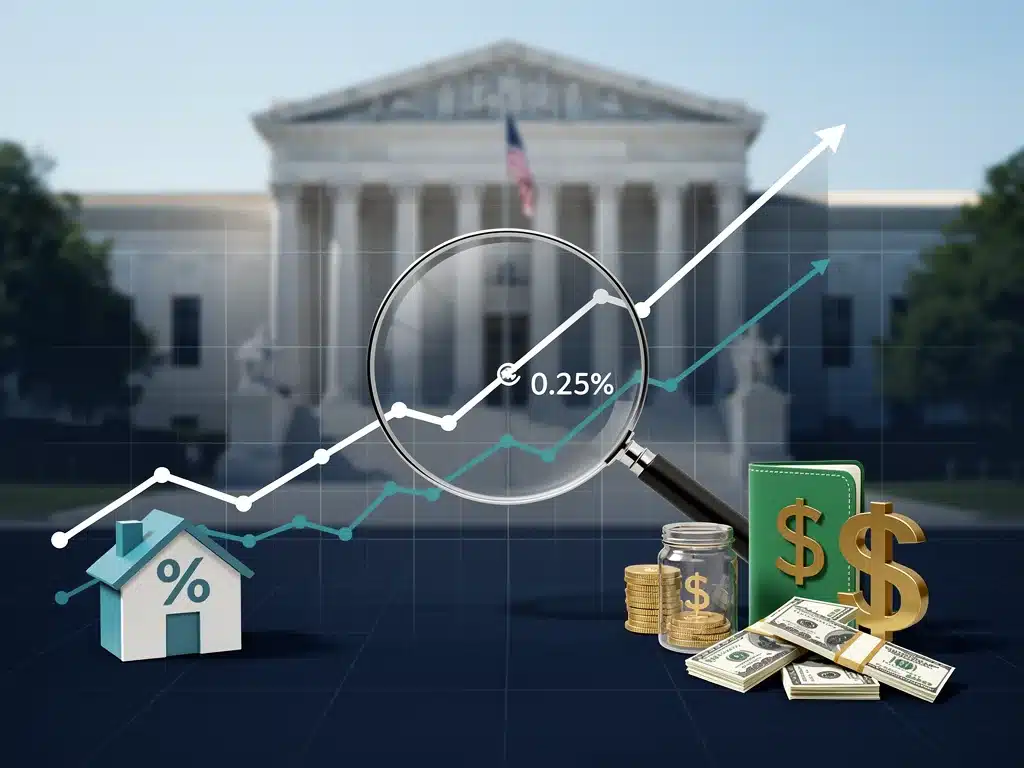
A 0.25% Fed interest rate hike in 2026 could significantly alter mortgage rates, increasing monthly payments for variable loans, while potentially offering modest gains for savers and influencing broader economic trends.
Anúncios
Understanding the latest on Fed interest rate hikes is crucial for every American household, especially as we look towards 2026. A seemingly small 0.25% increase can ripple through your personal finances, affecting everything from your monthly mortgage payments to the returns on your hard-earned savings.
The Federal Reserve’s Role in the Economy
The Federal Reserve, often simply called “the Fed,” plays a pivotal role in shaping the economic landscape of the United States. As the nation’s central bank, its primary objectives include maintaining maximum employment, stable prices, and moderate long-term interest rates. These goals are pursued through various monetary policy tools, with adjustments to the federal funds rate being one of the most visible and impactful.
Anúncios
When the Fed decides to raise interest rates, it’s typically a response to economic conditions such as inflation or an overheated economy. By making borrowing more expensive, the Fed aims to slow down economic activity, cool inflationary pressures, and prevent the economy from expanding too rapidly. Conversely, lowering rates is intended to stimulate growth during periods of recession or slow economic activity.
Understanding the Federal Funds Rate
The federal funds rate is the target rate for overnight lending between banks. While it’s not a rate that consumers directly pay, it serves as a benchmark for a wide range of other interest rates throughout the economy. Changes to this rate by the Federal Open Market Committee (FOMC) can quickly influence:
- Prime rate for commercial loans
- Mortgage interest rates
- Auto loan rates
- Credit card APRs
- Savings account yields
The Fed’s decisions are not made lightly; they involve extensive analysis of economic data, projections, and global financial conditions. The impact of even a small change, like 0.25%, can be substantial across various sectors, affecting both consumers and businesses. The transparency of the Fed’s communication is also vital, as market participants often react to anticipated changes even before they are formally announced.
Ultimately, the Fed’s actions are designed to foster a stable and prosperous economic environment. However, these actions inevitably create winners and losers in the short term, with borrowers and savers often experiencing contrasting effects. Keeping an eye on these developments is key to sound financial planning.
Direct Impact on Mortgage Rates
For many homeowners and prospective buyers, the most immediate and significant concern following a Fed interest rate hike is its effect on mortgage rates. While the federal funds rate doesn’t directly dictate mortgage rates, it certainly influences them, particularly for adjustable-rate mortgages (ARMs) and new fixed-rate loans.
When the Fed raises its benchmark rate, the cost of borrowing for banks increases. This higher cost is then passed on to consumers in the form of higher interest rates for various loan products, including mortgages. For those with fixed-rate mortgages, a 0.25% hike won’t immediately change their existing monthly payments, as their rate is locked in for the life of the loan. However, anyone looking to secure a new fixed-rate mortgage or refinance an existing one will likely face higher rates.
Adjustable-Rate Mortgages (ARMs) Explained
The impact is much more direct and often immediate for homeowners with adjustable-rate mortgages. ARMs typically have an initial fixed-rate period, after which the interest rate adjusts periodically based on a chosen index, often tied to the prime rate or LIBOR (though LIBOR is being phased out in favor of other indices like SOFR). If the Fed raises rates, these underlying indices tend to increase, leading to higher interest rates on ARMs.
- Increased Monthly Payments: A 0.25% hike could mean a noticeable increase in your monthly mortgage payment, depending on your outstanding balance and the terms of your ARM.
- Reduced Affordability: For new homebuyers, even a slight increase in mortgage rates can reduce their purchasing power, as higher interest costs translate to larger monthly payments for the same loan amount.
- Refinancing Considerations: Homeowners with existing ARMs might consider refinancing into a fixed-rate mortgage to lock in a stable payment, especially if further rate hikes are anticipated. However, refinancing costs and current fixed rates would need to be carefully evaluated.
It’s important to remember that mortgage rates are also influenced by other factors, including inflation expectations, the bond market, and overall economic sentiment. Therefore, while a Fed hike is a strong indicator, it’s not the sole determinant of where mortgage rates will land in 2026. Prospective and current homeowners should consult with financial advisors to understand their specific situation and explore potential strategies.
The Upside for Savers: Boosting Your Returns
While borrowers might view interest rate hikes with apprehension, savers often welcome them. A 0.25% increase in the federal funds rate generally translates to higher yields on various savings products. This means that individuals holding money in savings accounts, money market accounts, and Certificates of Deposit (CDs) could see their earnings increase, providing a modest boost to their financial growth.
Banks typically pass on a portion of the Fed’s rate increases to their depositors, albeit sometimes with a delay and not always in full. High-yield savings accounts, particularly those offered by online banks, are often quicker to reflect these changes. For those who have been frustrated by years of near-zero interest rates, even a small increase can be a positive development, encouraging more people to save.

Optimizing Your Savings Strategy
To make the most of rising interest rates, savers should actively review their current accounts and consider alternative options. Simply leaving money in a traditional savings account with a low yield might mean missing out on potential gains. Here are a few strategies:
- High-Yield Savings Accounts: These accounts typically offer significantly higher interest rates than traditional bank accounts and are often the first to reflect Fed rate hikes.
- Certificates of Deposit (CDs): CDs offer fixed interest rates for a specified term. If rates are expected to rise further, a laddering strategy (investing in CDs with different maturity dates) can allow you to reinvest at higher rates as older CDs mature.
- Money Market Accounts: Similar to savings accounts but often with check-writing privileges, money market accounts can also offer competitive interest rates that adjust with market conditions.
Even a 0.25% increase, compounded over time, can make a difference, especially for larger savings balances. It’s an opportune moment to compare different financial products and ensure your money is working as hard as possible for you. Don’t assume your bank will automatically give you the best rate; proactive research and potentially moving funds can yield better returns.
Broader Economic Implications for 2026
Beyond individual mortgages and savings, a Fed interest rate hike has far-reaching implications for the broader U.S. economy, influencing everything from business investment to employment and the stock market. In 2026, the cumulative effect of past and potential future rate adjustments will continue to shape the economic environment.
One of the primary goals of raising rates is to combat inflation. By making borrowing more expensive, the Fed aims to reduce demand across the economy, which in turn can help to stabilize prices. If successful, this could lead to a more predictable economic environment, benefiting consumers by preserving purchasing power. However, there’s always a delicate balance; too aggressive an approach could risk tipping the economy into a recession.
Impact on Business and Investments
- Slower Business Expansion: Companies might postpone or scale back investment plans, potentially affecting job creation and economic growth.
- Reduced Consumer Spending: Higher rates on credit cards and other consumer loans can deter spending, further contributing to a slowdown in demand.
- Stock Market Volatility: Rising interest rates can make bonds more attractive relative to stocks, as they offer a lower-risk return. This can lead to shifts in investment portfolios and potentially increased volatility in equity markets.
For the government, higher interest rates mean increased costs for servicing the national debt, which can put pressure on federal budgets. Internationally, a stronger U.S. dollar, often a consequence of higher rates, can make U.S. exports more expensive, impacting global trade balances. All these factors intertwine to create a complex economic picture that requires careful monitoring by policymakers and individuals alike.
Navigating Personal Finance in a Rising Rate Environment
For the average American, understanding how to navigate a period of rising interest rates is essential for maintaining financial stability and even identifying new opportunities. A 0.25% hike, while seemingly minor, is part of a larger trend that demands attention to personal financial strategies. Proactive planning can help mitigate negative impacts and leverage positive ones.
One key aspect is to review existing debt. For variable-rate loans such as credit cards, home equity lines of credit (HELOCs), and some student loans, monthly payments will likely increase. Prioritizing the repayment of high-interest, variable-rate debt can save a significant amount of money over time. Consider consolidating debt or exploring fixed-rate options if available and beneficial.
Key Strategies for Financial Resilience
To build financial resilience in a rising rate environment, consider these practical steps:
- Review Your Budget: Re-evaluate your income and expenses. Identify areas where you can cut back to offset potential increases in debt payments or to free up more funds for high-yield savings.
- Boost Emergency Savings: With potential economic uncertainties, having a robust emergency fund is more critical than ever. Aim for at least three to six months of living expenses in a high-yield savings account.
- Consult a Financial Advisor: A professional can provide personalized advice based on your specific financial situation, helping you adjust your investment portfolio and debt management strategies.
Additionally, for those planning major purchases like a home or car in 2026, understanding the trajectory of interest rates is paramount. Pre-approvals for loans can lock in rates for a period, offering some protection against immediate increases. Being informed and adaptable will be crucial for making sound financial decisions in the evolving economic climate.
Forecasting Future Fed Actions and Market Reactions
Predicting the Federal Reserve’s exact future actions is notoriously difficult, as their decisions are data-dependent and subject to change based on evolving economic conditions. However, market participants and economists constantly analyze indicators and Fed communications to forecast potential moves. For 2026, a 0.25% hike, if it occurs, would likely be part of a broader strategy to manage inflation and maintain economic stability.
The market’s reaction to a Fed hike is not always straightforward. Sometimes, a hike that is widely anticipated might have minimal impact, as it’s already “priced in” by investors. Conversely, an unexpected hike or one that signals a more aggressive stance from the Fed could lead to significant market volatility, affecting stock prices, bond yields, and currency exchange rates.
Key Indicators to Watch
Several economic indicators are closely monitored by the Fed and market analysts to gauge the likelihood of future rate adjustments:
- Inflation Data: Consumer Price Index (CPI) and Personal Consumption Expenditures (PCE) are crucial for understanding inflationary pressures.
- Employment Reports: Unemployment rates, job growth, and wage increases provide insights into the health of the labor market.
- GDP Growth: Gross Domestic Product figures indicate the overall economic output and growth trajectory.
Beyond these, global economic developments, geopolitical events, and consumer confidence surveys also play a role. Investors and individuals should stay informed by following reputable financial news sources and official Fed announcements. Understanding the underlying reasons for potential rate changes can help in making more informed financial decisions and anticipating how various asset classes might respond. The Fed’s communication often provides guidance on its outlook, making careful attention to their statements vital.
Historical Context of Interest Rate Adjustments
To fully appreciate the significance of a potential 0.25% Fed interest rate hike in 2026, it helps to look back at historical patterns of interest rate adjustments. The Federal Reserve has a long history of using interest rates as a primary tool to manage economic cycles, and these historical trends offer valuable lessons and context for current and future decisions. Understanding these patterns can help individuals and businesses anticipate potential impacts and plan accordingly.
Throughout different economic eras, the Fed has adjusted rates in response to various challenges, from combating runaway inflation in the 1970s and early 80s to stimulating growth during the Great Recession and the COVID-19 pandemic. Each period presented unique circumstances, but the underlying principle remains consistent: to balance economic growth with price stability. Sometimes, these adjustments have been aggressive, involving multiple percentage points, while at other times, they have been more gradual, like the anticipated 0.25% increment.
Lessons from Past Rate Cycles
Studying past rate cycles reveals several recurring themes:
- Lagged Effects: The full impact of interest rate changes is often not felt immediately. It can take several months, or even over a year, for the effects to fully ripple through the economy, influencing consumer spending, business investment, and inflation.
- Market Expectations: Financial markets often react not just to actual rate changes but also to the expectation of future changes. This means that assets like stocks and bonds can adjust in anticipation of Fed moves.
- Sector-Specific Impacts: Certain sectors of the economy are more sensitive to interest rate changes than others. The housing market, for instance, is highly responsive to mortgage rate fluctuations, while technology stocks might be more sensitive to borrowing costs for growth.
The historical record also shows that the Fed’s policies are often a balancing act. Aggressive rate hikes can curb inflation but risk slowing economic growth too much, potentially leading to a recession. Conversely, keeping rates too low for too long can fuel inflation and asset bubbles. The 0.25% adjustments are typically indicative of a Fed trying to fine-tune the economy rather than making a drastic course correction. This nuanced approach aims to achieve a “soft landing,” where inflation is controlled without triggering a severe downturn, a goal that remains challenging in practice.
| Key Aspect | Impact of 0.25% Hike |
|---|---|
| Mortgage Payments | Variable-rate mortgages likely see increased monthly payments; new fixed rates may be higher. |
| Savings Account Yields | Potential for higher returns on savings, especially in high-yield accounts and CDs. |
| Economic Growth | Aims to cool inflation, potentially leading to slower business investment and consumer spending. |
| Debt Management | Increases costs for variable-rate debts like credit cards and HELOCs, encouraging repayment. |
Frequently Asked Questions About Fed Rate Hikes
The Federal Reserve primarily raises interest rates to combat inflation and prevent the economy from overheating. By making borrowing more expensive, the Fed aims to reduce overall demand for goods and services, which can help stabilize prices and maintain the purchasing power of the U.S. dollar.
The effect on an ARM is not always immediate but typically occurs at the next scheduled adjustment period for your specific loan. This could be monthly, semi-annually, or annually, depending on your mortgage terms. You should review your loan documents for details on when rate adjustments take effect.
No, an existing fixed-rate mortgage will not be directly affected by a Fed interest rate hike. Your interest rate is locked in for the entire term of your loan, meaning your monthly payments will remain the same regardless of changes to the federal funds rate.
To benefit from rising rates, consider moving your savings to high-yield savings accounts, money market accounts, or Certificates of Deposit (CDs). These products typically offer better returns than traditional savings accounts and are quicker to reflect changes in the federal funds rate, maximizing your interest earnings.
Beyond mortgages, a Fed rate hike can impact various other loan types, including credit card annual percentage rates (APRs), auto loan interest rates, and home equity lines of credit (HELOCs). These loans often have variable rates tied to the prime rate, which typically moves in tandem with the federal funds rate.
Conclusion
The prospect of a 0.25% Fed interest rate hike in 2026 underscores the dynamic nature of the U.S. economy and the Federal Reserve’s ongoing efforts to maintain stability. While such an adjustment might seem minor, its ramifications are widespread, touching everything from the housing market to personal savings and broader economic trends. For homeowners with variable-rate mortgages, vigilance and proactive planning are key to managing potential increases in monthly payments. Conversely, savers have an opportunity to boost their returns by exploring high-yield options. Ultimately, staying informed about the Fed’s actions and understanding their potential impact is crucial for making sound financial decisions and navigating the evolving economic landscape effectively.