Accreditation Matters: 7 Red Flags for US Online Programs

Anúncios
Online program success hinges on proper accreditation; avoid unaccredited institutions to safeguard your educational and career investments.
When considering higher education, especially in the digital age, understanding why accreditation matters: 7 red flags to avoid when choosing a US online program in 2026 is paramount. This guide is designed to equip you with the knowledge needed to make an informed decision, ensuring your educational journey is both legitimate and valuable. Don’t let your investment in an online degree be undermined by a lack of proper vetting.
Anúncios
Understanding the Basics of Accreditation
Before diving into the red flags, it’s essential to grasp what accreditation truly means in the context of US higher education. Accreditation is a quality assurance process that evaluates educational institutions and programs to ensure they meet specific standards of excellence. This voluntary process is carried out by private, non-governmental organizations recognized by the US Department of Education (USDE) and the Council for Higher Education Accreditation (CHEA).
Accreditation serves as a critical indicator of an institution’s credibility and the quality of its academic offerings. Without proper accreditation, your degree might not be recognized by employers, other educational institutions for transfer credits, or even for professional licensing in certain fields. It’s the bedrock upon which the value of your education is built.
Anúncios
Regional vs. National Accreditation
In the US, there are primarily two types of institutional accreditation: regional and national. Regional accreditation is generally considered the gold standard for academic institutions, particularly for traditional colleges and universities offering associate’s, bachelor’s, master’s, and doctoral degrees. National accreditation, while valid, is often associated with vocational, technical, or career-oriented schools.
- Regional Accreditation: Typically recognized for broader academic transferability and by most graduate schools and employers.
- National Accreditation: Often more specialized and may have limited transferability of credits to regionally accredited institutions.
- Programmatic Accreditation: Specific to certain programs (e.g., nursing, engineering, business) and ensures the curriculum meets industry standards.
Understanding the distinction between these types is your first line of defense against choosing a less-than-reputable online program. Always aim for regionally accredited institutions if your goal is academic progression or broad career recognition.
Red Flag 1: Lack of Recognized Accreditation
The most significant red flag is, unequivocally, the absence of recognized accreditation. This isn’t just about whether an institution claims to be accredited, but whether that accreditation comes from a body recognized by the US Department of Education or CHEA. Many predatory institutions will invent their own accreditation bodies or use unapproved ones to mislead prospective students.
Always verify an institution’s accreditation status directly through the USDE or CHEA websites. These official sources provide comprehensive lists of recognized accrediting agencies and the institutions they oversee. If a program or institution isn’t listed, or its accreditor isn’t recognized, proceed with extreme caution.
How to Verify Accreditation
Verifying accreditation is a straightforward process that can save you immense trouble down the line. It involves cross-referencing information provided by the institution with official databases.
- Check the US Department of Education: Their website lists all recognized accrediting agencies.
- Consult CHEA: The Council for Higher Education Accreditation also maintains a database of accredited institutions and programs.
- Directly Contact the Accreditor: If you find an accreditor listed, visit their website and verify the institution’s status directly with them.
Do not rely solely on the institution’s website for accreditation claims. Scammers are adept at creating convincing but fake credentials. Your due diligence here is critical to avoiding a costly mistake.
Red Flag 2: Vague or Misleading Accreditation Claims
Some institutions won’t outright lie about accreditation but will use ambiguous language to obscure their true status. Phrases like ‘fully accredited by an international board’ or ‘recognized by our peers’ without naming a specific, recognized accrediting body are immediate causes for concern. They might also claim ‘state approval’ which is different from accreditation and does not guarantee quality or recognition.
A legitimate institution will proudly and clearly display its accreditation from a recognized agency. They will usually link directly to their accreditor’s website or provide clear instructions on how to verify their status. Transparency is key here; a lack of it signals a potential problem.
The Difference Between Approval and Accreditation
It’s crucial to distinguish between state approval and accreditation. State approval means an institution is legally allowed to operate within a state and grant degrees. However, it does not necessarily mean the degrees are recognized for transfer, employment, or further education in the same way an accredited degree is. Accreditation signifies a higher standard of academic quality and institutional integrity.
Always look for both state approval and recognized accreditation. While state approval is a necessary legal step, it is not a substitute for the comprehensive quality assurance provided by recognized accreditation bodies. An institution that heavily emphasizes state approval while downplaying or omitting recognized accreditation is a significant red flag.
Red Flag 3: Unrealistic Promises and Guaranteed Outcomes
Be wary of any online program that promises guaranteed job placement, exceptionally high salaries immediately after graduation, or a degree in an impossibly short timeframe. While legitimate institutions often share career success stories and statistics, they rarely make absolute guarantees. Education is an investment, and outcomes depend on many factors, including student effort and market conditions.
These unrealistic promises are often designed to lure students into programs that may lack academic rigor or industry recognition. Such institutions prey on the hopes and dreams of individuals seeking a quick path to success, often at a significant financial cost. A reputable program will provide realistic expectations and focus on equipping you with skills, not making impossible pledges.
Questioning High-Pressure Sales Tactics
Another related red flag involves high-pressure sales tactics. If an admissions representative is pushing you to enroll immediately, discouraging you from asking questions, or pressing you to sign financial aid documents without thorough review, take a step back. Legitimate institutions prioritize informed decision-making and will give you ample time to consider your options, discuss financial aid, and understand the program’s requirements.
Trust your instincts. If something feels off, it probably is. A reputable educational institution wants you to succeed, and that starts with making a well-thought-out decision, not a rushed one. 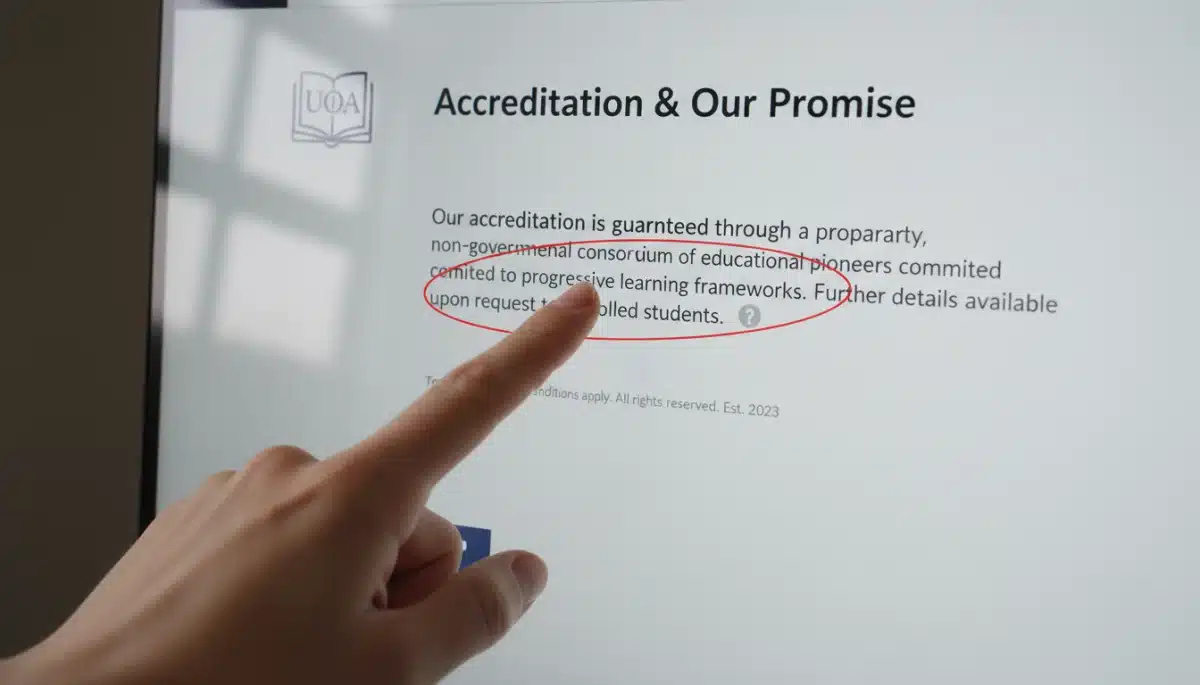
Red Flag 4: Extremely Low Tuition or Instant Enrollment
While online education can sometimes be more affordable than traditional on-campus programs, extremely low tuition fees that seem too good to be true often are. Quality education comes at a cost, and institutions with legitimate accreditation and qualified faculty typically have operational expenses that reflect in their tuition. Similarly, instant enrollment without any application process, academic prerequisites, or verification of prior education is a major warning sign.
A legitimate admissions process involves submitting applications, transcripts, and often essays or recommendations. It’s designed to ensure students are prepared for the academic rigor of the program. Programs that allow anyone to enroll instantly, regardless of qualifications, are likely more interested in collecting tuition than providing quality education.
Understanding Program Costs and Value
Research the average tuition costs for similar programs at accredited institutions. If a program’s cost is drastically lower, investigate why. It could be a sign of a lack of resources, unqualified faculty, or an unaccredited status that will ultimately devalue your degree. Remember, you’re investing in your future, and sometimes paying a little more for a recognized degree is a far better investment than saving money on one that holds no value.
Red Flag 5: Lack of Faculty Credentials and Support Services
The quality of an online program is heavily reliant on its faculty. A significant red flag is an institution that provides little to no information about its instructors’ credentials, experience, or academic backgrounds. Legitimate universities pride themselves on their faculty and will prominently feature their qualifications, research, and publications. Be wary if faculty profiles are sparse, generic, or non-existent.
Beyond faculty, consider the support services offered. Reputable online programs provide robust student support, including academic advising, technical support, career services, library access, and mental health resources. A lack of these essential services indicates an institution that may not be invested in student success beyond enrollment.
Importance of Student Support in Online Learning
Online learning requires a different set of support mechanisms compared to traditional campuses. Access to responsive technical support is crucial for navigating virtual learning environments. Academic advising helps students stay on track, and career services are vital for translating a degree into employment opportunities. Without these, students in online programs can feel isolated and struggle to complete their studies effectively.
Red Flag 6: Limited or Non-Existent Alumni Network and Career Services
A strong alumni network and effective career services are hallmarks of a reputable institution. These resources not only provide valuable networking opportunities but also reflect the institution’s long-term commitment to its graduates’ success. If an online program cannot demonstrate an active alumni community or offers minimal to no career support, it’s a cause for concern.
Prestigious institutions often leverage their alumni connections to provide mentorship, internships, and job placement assistance. The absence of such infrastructure suggests a lack of institutional history, community, or investment in its students’ post-graduation success. This can significantly hinder your career prospects even with a legitimate degree.
Investigating Post-Graduation Support
Inquire specifically about career placement rates, employer partnerships, and the types of career counseling available. Ask to speak with alumni if possible. A program that is evasive or vague about these aspects might not be providing the comprehensive support necessary for a successful transition into the workforce or further academic pursuits.
Red Flag 7: Poor Online Presence and Negative Reviews
In 2026, a legitimate online program should have a professional, well-maintained online presence. This includes a user-friendly website, active social media channels, and a general digital footprint that reflects a credible educational institution. A poorly designed website, broken links, or outdated information can be indicators of a lack of resources or attention to detail.
Furthermore, conduct thorough online research for reviews and testimonials. While every institution might have some negative feedback, a pattern of widespread complaints regarding accreditation issues, poor instruction, unfulfilled promises, or difficulty with financial aid is a significant red flag. Look beyond the institution’s own testimonials and seek out independent reviews on educational forums, consumer protection sites, and social media.
The Power of Independent Reviews
Independent review sites and forums can offer invaluable insights into the student experience. Pay attention to recurring themes in negative reviews, especially those related to accreditation, financial transparency, or the quality of instruction. A consistent pattern of complaints often points to systemic issues within the institution that you should be aware of before committing.
| Red Flag | Brief Description |
|---|---|
| Unrecognized Accreditation | Accreditation not listed by USDE or CHEA. |
| Unrealistic Promises | Guaranteed jobs or rapid degrees. |
| Poor Online Presence | Outdated website or consistent negative reviews. |
| Lack of Faculty Credentials | Limited or vague information about instructors. |
Frequently Asked Questions About Online Program Accreditation
The primary purpose of accreditation is to ensure quality and integrity in educational programs. It verifies that an online program meets established academic standards, making its degrees recognized by employers, other educational institutions for credit transfer, and for professional licensing, ultimately safeguarding your investment.
You can verify the legitimacy of an accrediting agency by checking the official websites of the US Department of Education (USDE) and the Council for Higher Education Accreditation (CHEA). Both organizations maintain comprehensive lists of recognized accrediting bodies, ensuring you can distinguish legitimate agencies from fraudulent ones.
Regional accreditation is generally considered the gold standard for academic degrees, offering broader recognition for credit transfer and advanced studies. National accreditation is often for vocational or technical programs. For most academic pursuits, especially if you plan to pursue graduate studies, regional accreditation is preferable.
If a program only claims ‘state approval,’ treat it as a significant red flag. While state approval allows an institution to operate, it doesn’t guarantee academic quality or recognition in the same way recognized accreditation does. Always seek programs with recognized accreditation from USDE or CHEA-approved bodies.
Transferring credits from an unaccredited online program to an accredited institution is highly unlikely. Most accredited colleges and universities only accept credits from other recognized accredited institutions. Enrolling in an unaccredited program risks your academic progress and financial investment, as your credits may not be transferable.
Conclusion
Choosing an online program for your future in 2026 is a significant decision, and understanding why accreditation matters: 7 red flags to avoid when choosing a US online program in 2026 is your most powerful tool. By diligently verifying accreditation, scrutinizing promises, evaluating costs, assessing faculty and support, and researching an institution’s reputation, you can protect your investment and ensure your educational path leads to legitimate and recognized success. Be proactive, be informed, and never compromise on the quality and validity of your education.