Student Loan Repayment Plans 2026: Navigating New Federal Programs

Anúncios
The evolving landscape of student loan repayment plans in 2026 necessitates a clear understanding of new federal programs designed to help borrowers manage debt and achieve significant savings.
Anúncios
As we approach 2026, the financial landscape for higher education continues to evolve, bringing significant changes to how millions of Americans manage their educational debt. Understanding student loan repayment 2026 is not merely about staying compliant; it’s about strategically navigating new federal programs to potentially save thousands of dollars over the life of your loans. This article will break down the crucial updates and offer actionable insights to help you make informed decisions.
Anúncios
Understanding the Shifting Landscape of Federal Student Loans
The federal student loan system is a dynamic entity, constantly being refined to better serve borrowers. These changes are often driven by economic conditions, policy shifts, and a recognition of the growing burden of student debt. For 2026, several key adjustments are on the horizon, impacting everything from interest rates to eligibility for forgiveness programs.
Staying informed about these updates is paramount. Many borrowers miss out on opportunities for relief simply because they are unaware of new provisions or how to access them. The government’s goal is often to make repayment more manageable, but the onus is on the borrower to understand and apply for the most beneficial plans.
Key Legislative Changes and Their Impact
Recent legislative actions have laid the groundwork for the 2026 repayment environment. These changes often aim to simplify the application process for income-driven repayment (IDR) plans, expand eligibility for certain benefits, and provide clearer pathways to loan forgiveness. The overarching theme is often to create a more equitable and sustainable system for all.
- Streamlined IDR Applications: New processes are being implemented to make applying for and recertifying income-driven repayment plans less cumbersome, reducing administrative hurdles for borrowers.
- Expanded Eligibility: Certain programs may see expanded criteria, allowing more borrowers to qualify for reduced monthly payments or even eventual loan forgiveness.
- Enhanced Communication: Federal loan servicers are expected to improve communication with borrowers, ensuring they are aware of their options and deadlines.
These legislative shifts are not just bureaucratic adjustments; they represent real opportunities for borrowers to significantly alter their financial trajectory. By understanding the intent behind these changes, individuals can better position themselves to take advantage of the available support.
In essence, the federal student loan landscape in 2026 is designed to be more accessible and forgiving, provided borrowers actively engage with the system. Proactive research and communication with loan servicers will be crucial for maximizing these new benefits.
Deep Dive into New Income-Driven Repayment (IDR) Options
Income-Driven Repayment (IDR) plans have long been a cornerstone of federal student loan relief, designed to make monthly payments affordable based on a borrower’s income and family size. For 2026, significant enhancements to IDR plans are expected to further reduce the financial strain on many borrowers, particularly those with lower incomes or high debt-to-income ratios.
These new IDR options aim to address criticisms of previous plans, such as complex calculations and slow progress toward forgiveness. The focus is on simplifying the borrower experience and providing a clearer path to debt relief, often with more generous terms.
Understanding the SAVE Plan and its Evolution
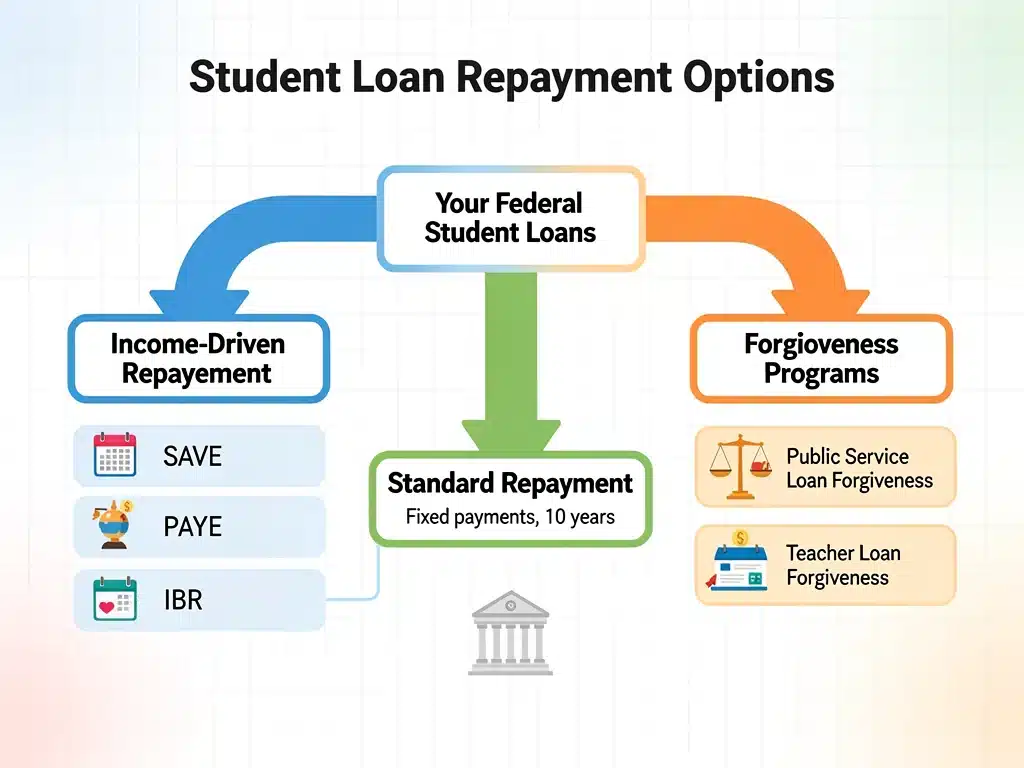
The Saving on a Valuable Education (SAVE) Plan, or its successor, is set to become an even more impactful option for borrowers in 2026. This plan, which replaced the REPAYE plan, already offers significant benefits, and further refinements are anticipated. The goal is to ensure that monthly payments are truly affordable, preventing interest from capitalizing and leading to ballooning debt.
- Lower Discretionary Income Calculation: The percentage of discretionary income used to calculate payments may be further reduced, lowering monthly bills for many.
- Interest Subsidies: Provisions that prevent unpaid interest from accumulating could be strengthened, meaning your loan balance won’t grow as long as you make your reduced payments.
- Shorter Path to Forgiveness: Forgiveness timelines, especially for borrowers with lower original loan balances, may be shortened, allowing for earlier debt relief.
The SAVE Plan, or its 2026 iteration, represents a paradigm shift in how federal student loans are managed. It is designed to be the most affordable repayment option for the vast majority of borrowers, making it a critical program to understand and utilize.
Navigating these new IDR options requires careful consideration of your individual financial situation. While the plans are designed to be more straightforward, understanding how your income, family size, and loan balance interact with the new rules is key to maximizing your benefits and potentially saving thousands over the long term.
Exploring Expanded Loan Forgiveness Programs
Student loan forgiveness has always been a beacon of hope for many borrowers, and 2026 is expected to bring expanded opportunities and clearer guidelines for various forgiveness programs. These programs are often designed to support public service workers or those who have consistently made payments under specific plans for an extended period.
Beyond the well-known Public Service Loan Forgiveness (PSLF) program, new initiatives or modifications to existing ones are often introduced to address specific societal needs or to provide relief to particular groups of borrowers who have faced long-term financial hardship.
Public Service Loan Forgiveness (PSLF) Enhancements
The PSLF program, which forgives the remaining balance on Direct Loans after 120 qualifying monthly payments while working full-time for a qualifying employer, is expected to see continued improvements. These enhancements aim to simplify the application process, clarify eligibility requirements, and ensure that more public servants can benefit from the program.
- Simplified Employer Certification: The process for certifying eligible employment may become more streamlined, reducing the administrative burden on both employers and borrowers.
- Expanded Qualifying Payments: There may be provisions to count more payment types or periods of deferment/forbearance towards the 120-payment requirement, making forgiveness more attainable.
- Better Communication: The Department of Education is committed to improving communication with PSLF-eligible borrowers, ensuring they understand their progress towards forgiveness.
These PSLF enhancements are crucial for attracting and retaining talent in public service sectors. For eligible individuals, PSLF can represent a significant financial relief, potentially eliminating tens or even hundreds of thousands of dollars in debt.

Other Forgiveness Pathways to Consider
Beyond PSLF, other forgiveness or discharge programs may see updates or renewed emphasis in 2026. These can include borrower defense to repayment for those defrauded by institutions, total and permanent disability discharges, and teacher loan forgiveness. Each program has specific criteria, and understanding them is essential.
The landscape of loan forgiveness is complex but offers substantial opportunities for relief. Borrowers should actively research all potential avenues, as qualifying for even one program can lead to significant savings.
Strategies to Maximize Savings on Your Student Loans
Navigating the intricacies of federal student loan repayment plans in 2026 goes beyond simply choosing a plan; it involves strategic financial planning to maximize savings. This means understanding how to optimize your chosen plan, leveraging any available tax benefits, and making informed decisions about additional payments or refinancing.
The goal is not just to manage your debt, but to actively work towards reducing its overall cost. This proactive approach can lead to substantial financial gains over the life of your loans, freeing up resources for other financial goals.
Optimizing Your Repayment Plan
Once you’ve selected a repayment plan, such as one of the new IDR options, continuous optimization is key. Your income and family size can change, impacting your monthly payments. Regularly reviewing and recertifying your income is crucial to ensure your payments remain affordable and accurate.
- Annual Income Recertification: Make sure to recertify your income and family size annually, or whenever there’s a significant change, to keep your payments adjusted correctly.
- Understanding Interest Accrual: Even on IDR plans, interest can accrue. Understand how interest is handled on your specific plan and if any interest subsidies apply to prevent balance growth.
- Tracking Progress Towards Forgiveness: If you are on an IDR plan or PSLF, diligently track your qualifying payments to ensure you are on track for forgiveness and can address any discrepancies early.
Optimizing your repayment plan isn’t a one-time task; it’s an ongoing process that adapts to your life circumstances. Being vigilant and proactive will ensure you’re always on the most advantageous path.
Furthermore, consider how any additional payments you might make could impact your overall savings. Even small extra payments can reduce the principal balance and the total interest paid over time, especially if your plan doesn’t have prepayment penalties.
Understanding the Role of Loan Servicers and Resources
Your loan servicer acts as the primary point of contact for managing your federal student loans. They are responsible for processing your payments, providing information about repayment plans, and assisting with applications for deferment, forbearance, or forgiveness. For 2026, improved communication and support from loan servicers are anticipated to help borrowers navigate the new federal programs more effectively.
However, it’s important to remember that while servicers provide essential services, borrowers also have a responsibility to be informed and proactive. Knowing how to effectively communicate with your servicer and where to find reliable information is critical for success.
Effective Communication with Your Servicer
Building a good working relationship with your loan servicer is invaluable. They can clarify complex rules, help you understand your options, and guide you through application processes. Don’t hesitate to reach out if you have questions or experience changes in your financial situation.
- Keep Records: Always keep detailed records of all communications with your servicer, including dates, names of representatives, and summaries of conversations.
- Ask for Clarification: If something is unclear, ask for explanations in writing or request to speak with a supervisor if needed.
- Utilize Online Portals: Most servicers offer robust online portals where you can manage your account, make payments, and access important documents.
Effective communication ensures that you receive accurate information and that your account is managed correctly. This can prevent costly mistakes and ensure you are on the right repayment path.
Leveraging Federal Resources and Websites
Beyond your loan servicer, the U.S. Department of Education and its associated websites are invaluable resources. Federal Student Aid (StudentAid.gov) is the official hub for all federal student loan information, including detailed descriptions of repayment plans, eligibility requirements, and application forms. This site is regularly updated with the latest policy changes and guidance.
These federal resources provide authoritative and comprehensive information, helping borrowers make informed decisions and avoid misinformation. Regularly checking these sites ensures you have access to the most current and accurate details regarding your student loans.
Potential Pitfalls and How to Avoid Them in 2026
While new federal programs in 2026 offer significant opportunities for student loan borrowers, navigating this landscape is not without its potential pitfalls. Understanding these common traps and how to avoid them is just as important as knowing about the benefits themselves. A single misstep can negate potential savings or even lead to increased debt.
Being prepared means being aware of the common challenges and having a strategy to overcome them. This proactive approach will safeguard your financial well-being and ensure you fully benefit from the available relief.
Common Mistakes and Misconceptions
Many borrowers fall victim to misconceptions or make simple errors that can have long-lasting consequences. One of the most prevalent is assuming that their loan situation will remain static, leading to a lack of engagement with their servicer or a failure to recertify income.
- Ignoring Communication: Disregarding emails or letters from your loan servicer can lead to missed deadlines for recertification or important updates about your account.
- Misunderstanding Eligibility: Incorrectly assuming you don’t qualify for a certain program, or conversely, believing you qualify when you don’t, can lead to incorrect repayment choices.
- Not Tracking Payments: Forgiveness programs like PSLF require a specific number of qualifying payments. Failing to track these can lead to disputes or delays in receiving forgiveness.
Avoiding these common mistakes requires diligence and a willingness to stay informed. Treat your student loan management with the same seriousness as any other major financial commitment.
Protecting Yourself from Scams
Unfortunately, the student loan landscape is also ripe for scams. Companies often prey on borrowers’ anxieties by offering services that promise quick fixes or guaranteed forgiveness for a fee. These services are often illegitimate and can put your personal and financial information at risk.
Always remember that federal student loan benefits and programs are free to apply for directly through your loan servicer or StudentAid.gov. Never pay a third party for help that you can get for free. Be wary of unsolicited offers, especially those that pressure you for immediate action or ask for your Federal Student Aid (FSA) ID.
By staying vigilant and relying on official sources, you can protect yourself from fraudulent schemes and ensure that your efforts to manage your student loans are both effective and secure.
Planning for Your Financial Future Beyond Student Loans
Successfully navigating student loan repayment in 2026 is not an end in itself, but a crucial step towards building a robust financial future. Once your student loan strategy is firmly in place, it opens up opportunities to focus on other essential financial goals, such as saving for retirement, purchasing a home, or investing.
The relief gained from optimized repayment plans or loan forgiveness can be a powerful catalyst for accelerating your overall financial growth. It’s about shifting from debt management to wealth creation.
Integrating Student Loan Strategy with Broader Financial Goals
Your student loan repayment strategy should be an integral part of your larger financial plan. Understanding how your monthly loan payments impact your cash flow allows you to better allocate funds towards other priorities. For instance, if you’re on an IDR plan with low monthly payments, you might have more disposable income to direct towards an emergency fund or a down payment.
- Emergency Fund: Prioritize building an emergency fund of 3-6 months’ living expenses. This provides a safety net, reducing the need to rely on high-interest debt in case of unexpected expenses.
- Retirement Savings: Even with student loan debt, contributing to a retirement account, especially if your employer offers a match, is crucial for long-term financial security.
- Other Debt Reduction: If you have higher-interest debt, such as credit card balances, a lower student loan payment might free up funds to tackle these more aggressively.
By viewing your student loan strategy within the context of your entire financial picture, you can make more holistic and impactful decisions that benefit your long-term wealth.
The Long-Term Impact of Smart Repayment Choices
The decisions you make regarding your student loans today will resonate for years, if not decades, to come. Choosing the right repayment plan, understanding forgiveness options, and proactively managing your account can save you tens of thousands of dollars in interest and principal. This saved money can then be reinvested into your life, whether through education, career development, or personal investments.
Ultimately, a well-executed student loan repayment strategy in 2026 empowers you to take control of your financial destiny, transforming a potential burden into a manageable stepping stone towards financial freedom and future prosperity.
| Key Point | Brief Description |
|---|---|
| New IDR Plans | Enhanced income-driven repayment options, like SAVE, offer lower monthly payments and better interest subsidies. |
| Forgiveness Programs | PSLF and other forgiveness pathways are seeing enhancements, making debt relief more accessible for eligible borrowers. |
| Servicer Communication | Maintain clear communication with your loan servicer and keep detailed records to ensure accurate account management. |
| Avoid Scams | Be vigilant against fraudulent offers; federal student loan help is free and available directly through official channels. |
Frequently Asked Questions About 2026 Student Loan Repayment
The most significant changes in 2026 are expected in income-driven repayment (IDR) plans, particularly with enhancements to the SAVE Plan. These may include lower discretionary income calculations for payments, stronger interest subsidies to prevent balance growth, and potentially shorter paths to loan forgiveness for certain borrowers. The aim is to make repayment more affordable and accessible.
Eligibility for loan forgiveness programs, such as Public Service Loan Forgiveness (PSLF), typically depends on your employment type, loan type, and repayment history. You should check StudentAid.gov or contact your loan servicer directly. They can provide detailed information on specific program requirements and assist with the application process, ensuring you meet all necessary criteria.
Federal student loan interest rates are set annually based on a formula tied to the 10-year Treasury note. While specific rates for 2026 are not yet known, they are subject to market fluctuations. It’s important to monitor official announcements from the Department of Education as the year approaches to understand the prevailing interest rates for new and existing loans.
To prepare, regularly visit StudentAid.gov for official updates and review your current loan details. Ensure your contact information with your loan servicer is up-to-date. Consider your income and family size to anticipate eligibility for IDR plans. Proactive engagement with official resources will help you make informed decisions and adapt to any new regulations effectively.
Yes, the U.S. Department of Education consistently updates StudentAid.gov with comprehensive guides, FAQs, and tools to help borrowers. Loan servicers are also expected to enhance their support channels. Additionally, non-profit organizations and financial counselors often provide free, reliable advice. Always prioritize official government websites and your loan servicer for the most accurate information.
Conclusion
The evolving landscape of federal student loan repayment plans in 2026 presents both challenges and significant opportunities for borrowers. By staying informed about new federal programs, particularly the enhanced income-driven repayment options and expanded forgiveness pathways, individuals can strategically navigate their debt. Proactive engagement with loan servicers, careful tracking of payments, and reliance on official resources are paramount to maximizing savings and avoiding potential pitfalls. Ultimately, understanding these changes will empower borrowers to make informed decisions that not only alleviate immediate financial burdens but also pave the way for a more secure and prosperous financial future, transforming student loan management into a powerful tool for wealth building.