Workers’ Comp 2026: Key Benefit Updates for Workplace Injuries

Anúncios
Workers’ Compensation in 2026 introduces significant updates, directly affecting benefits for workplace injuries and illnesses across various industries.
Anúncios
As the landscape of employment evolves, so too do the protections afforded to workers. Understanding Workers’ Compensation in 2026 is more critical than ever, especially with significant updates impacting benefits for workplace injuries and illnesses. Are you prepared for these changes?
Anúncios
Understanding the Core Principles of Workers’ Compensation
Workers’ compensation is a form of insurance providing wage replacement and medical benefits to employees injured in the course of employment in exchange for mandatory relinquishment of the employee’s right to sue their employer for negligence. This system is designed to provide a quick and efficient resolution for work-related injuries, ensuring that injured workers receive necessary care and financial support without lengthy legal battles. In 2026, the fundamental principles remain, but the specifics of how these benefits are calculated and administered are undergoing crucial revisions.
The core objective of workers’ compensation is twofold: to protect employees who suffer job-related injuries or illnesses and to shield employers from potentially devastating lawsuits. It fosters a system of mutual responsibility where both parties have clear guidelines. For employees, it means access to medical treatment and income replacement; for employers, it means predictable costs and reduced litigation risk. The updates for 2026 aim to refine this balance, addressing new workplace realities and economic pressures.
Eligibility Criteria and Covered Injuries
To be eligible for workers’ compensation, an injury or illness must arise out of and in the course of employment. This typically means the incident occurred while performing job duties or engaging in activities for the employer’s benefit. However, determining what constitutes a ‘work-related’ injury can sometimes be complex, especially with the rise of remote work and new occupational hazards.
- Accidental Injuries: Sudden incidents like falls, cuts, or strains.
- Occupational Diseases: Conditions developed over time due to work exposure, such as carpal tunnel syndrome or certain respiratory illnesses.
- Aggravation of Pre-existing Conditions: If work duties worsen an existing health issue.
- Mental Health Conditions: Increasingly recognized as compensable if directly linked to workplace events or conditions.
The changes in 2026 may refine the definitions of what constitutes a compensable injury, particularly in areas like mental health and long-term exposure to certain substances or environments. Staying informed about these nuanced definitions is essential for both employees filing claims and employers managing their workforce.
Key Legislative Changes Impacting Benefits in 2026
The year 2026 brings forth a series of legislative adjustments that will significantly shape the landscape of workers’ compensation benefits. These changes are often driven by evolving economic conditions, advancements in medical understanding, and shifts in employment practices. Staying abreast of these legislative updates is paramount for anyone involved in the workers’ compensation system, from injured workers to claims adjusters and legal professionals.
One of the primary drivers behind these legislative changes is the ongoing effort to modernize workers’ compensation laws to reflect contemporary workplaces. With the increase in remote work, gig economy participation, and new technologies, traditional definitions and benefit structures sometimes fall short. Lawmakers are attempting to create a more equitable and effective system that addresses these emerging challenges while maintaining the core purpose of workers’ compensation.
Adjustments to Wage Replacement Rates
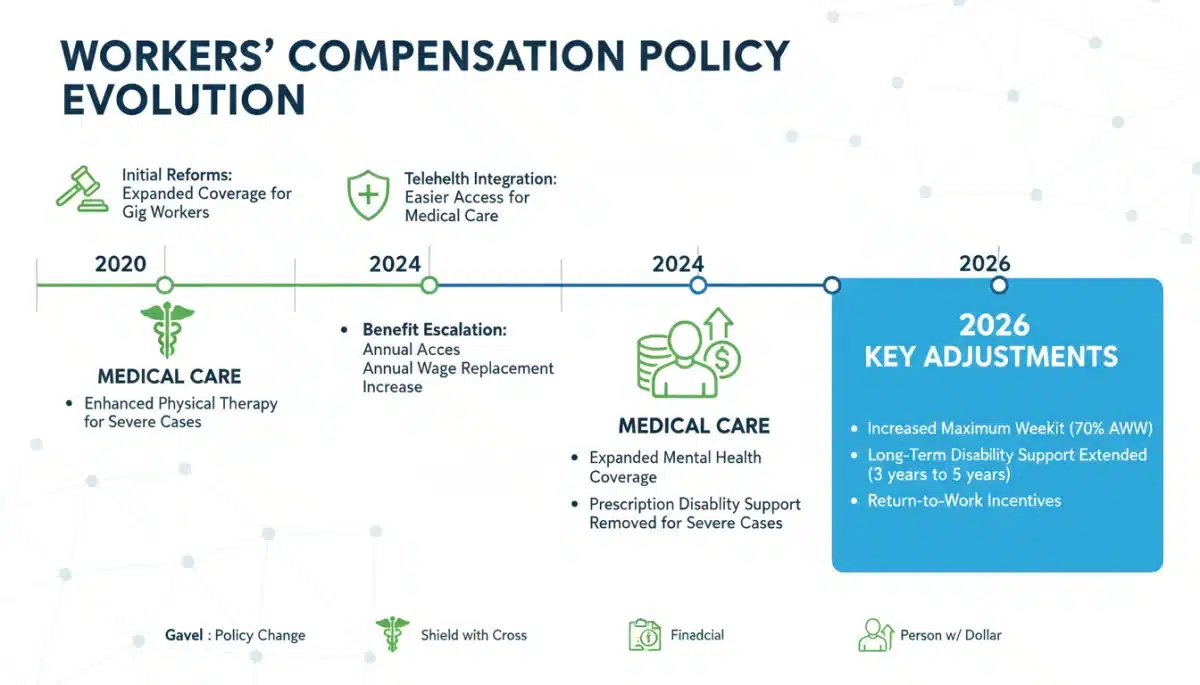
A crucial area of focus for 2026 legislative updates involves wage replacement rates. These rates determine the percentage of an injured worker’s average weekly wage they receive while temporarily or permanently unable to work. Many states are reviewing their current formulas to ensure they adequately support injured workers without creating undue burden on employers. Some proposed changes include:
- Increased Minimum and Maximum Benefit Caps: To better reflect the rising cost of living and average wages.
- Revised Calculation Methods: Potentially incorporating a broader range of income sources for gig workers or those with variable schedules.
- Inflationary Adjustments: Mandating annual or biennial adjustments to benefit rates to keep pace with economic inflation.
These adjustments aim to provide a more realistic safety net for injured workers, ensuring that their financial stability is not completely eroded during recovery. It’s vital for employees to understand how their specific wage replacement benefits will be calculated under the new rules.
Medical Benefits and Healthcare Access: What’s New?
Medical benefits are a cornerstone of workers’ compensation, covering the costs associated with treating work-related injuries and illnesses. In 2026, several significant updates are expected regarding the scope of covered medical treatments, access to care, and the integration of new healthcare technologies. These changes aim to improve patient outcomes while also addressing rising healthcare costs.
The focus on medical benefits extends beyond just covering doctor visits and surgeries. It encompasses rehabilitation, prescription medications, specialized therapies, and even durable medical equipment. The evolving healthcare landscape, with its emphasis on preventative care and advanced diagnostics, is directly influencing how workers’ compensation systems approach medical treatment. The goal is to ensure injured workers receive the most effective and appropriate care available.
Expansion of Covered Treatments and Telemedicine
One notable trend for 2026 is the expansion of covered treatments, particularly in areas that have gained traction due to scientific advancements and patient demand. This includes greater recognition and coverage for:
- Mental Health Services: Increased coverage for psychological counseling, therapy, and psychiatric evaluations directly related to workplace trauma or chronic pain.
- Alternative Therapies: A potential increase in coverage for treatments like acupuncture, chiropractic care, and massage therapy when prescribed by a physician for specific conditions.
- Telemedicine and Virtual Care: Further integration of telehealth services for consultations, follow-ups, and even some forms of physical therapy, enhancing access for workers in remote areas or those with mobility issues.
These expansions reflect a more holistic approach to recovery, acknowledging that physical injuries often have psychological components and that convenient access to care can significantly impact recovery times. Employers and insurers will need to adapt to these broader definitions of necessary medical care.
Navigating the Claims Process in 2026: Employee and Employer Perspectives
The claims process for workers’ compensation can often feel daunting, but understanding the steps involved is crucial for both employees seeking benefits and employers managing claims. In 2026, while the fundamental stages remain, there may be procedural adjustments and increased emphasis on digital submissions and improved communication protocols. Streamlining this process is a common goal for many state legislatures.
For employees, a clear understanding of their rights and responsibilities during the claims process can prevent delays and ensure they receive the benefits they are entitled to. For employers, efficient claims management can help control costs, maintain a positive work environment, and ensure compliance with state regulations. The updates in 2026 aim to enhance transparency and efficiency for all parties involved.
Employee Responsibilities in Filing a Claim
For an injured employee, prompt action is key. The process typically begins with notifying the employer and seeking medical attention. Specific steps include:
- Prompt Notification: Informing your employer of the injury as soon as possible, usually within a few days or weeks, depending on state law.
- Seeking Medical Treatment: Obtaining medical care from an approved provider and clearly stating that the injury is work-related.
- Filing a Formal Claim: Completing and submitting the necessary workers’ compensation claim forms to the state agency or insurer.
- Cooperating with Investigations: Providing information and attending medical evaluations as requested.
In 2026, there might be new digital portals for claim submission or updated forms, so employees should verify the current procedures with their employer or state workers’ compensation board. Accurate and timely documentation remains paramount for a successful claim.
The Impact of Technology on Workers’ Compensation in 2026
Technology continues to reshape every industry, and workers’ compensation is no exception. In 2026, we can expect to see further integration of technological advancements aimed at improving efficiency, accuracy, and overall outcomes within the system. From claim processing to injury prevention and rehabilitation, technology is playing an increasingly vital role. These innovations are designed to benefit both injured workers and the administrative bodies managing claims.
The digital transformation within workers’ compensation is not just about automation; it’s about leveraging data, artificial intelligence, and connectivity to create a more responsive and effective system. This includes everything from how claims are reported to how medical treatments are monitored and how fraud is detected. Understanding these technological shifts is crucial for all stakeholders.
Artificial Intelligence and Data Analytics in Claims Management
Artificial intelligence (AI) and advanced data analytics are poised to revolutionize several aspects of workers’ compensation in 2026. These technologies can process vast amounts of information quickly and identify patterns that human analysis might miss. Potential applications include:
- Fraud Detection: AI algorithms can analyze claim data to flag suspicious patterns or inconsistencies, helping to reduce fraudulent claims.
- Predictive Analytics: Using data to predict recovery timelines, potential complications, and the likelihood of successful return-to-work, allowing for more proactive case management.
- Automated Processing: Streamlining the initial stages of claim intake and routing, reducing administrative delays.
- Personalized Treatment Plans: Data analytics can help tailor rehabilitation programs based on individual worker profiles and injury types, optimizing recovery.
While these technologies offer significant advantages, concerns about data privacy and algorithmic bias will continue to be important considerations for their ethical implementation.
Preventative Measures and Workplace Safety Initiatives for the Future
While workers’ compensation provides a safety net after an injury, the ultimate goal for both employees and employers should be prevention. In 2026, there’s a growing emphasis on proactive workplace safety initiatives and the integration of technology to mitigate risks before they lead to injuries. A strong safety culture not only protects workers but also reduces workers’ compensation costs for businesses.
Investing in prevention yields significant returns, both in human well-being and financial savings. As workplaces evolve, so do the types of hazards workers face, from physical strains to psychological stressors. Comprehensive safety programs must adapt to these changing dynamics, incorporating both traditional safety protocols and innovative approaches.
Ergonomics and Mental Wellness Programs
Modern workplace safety extends beyond hard hats and safety goggles. Two areas gaining significant traction in 2026 are ergonomics and mental wellness:
- Advanced Ergonomic Assessments: Utilizing sensor technology and AI to analyze worker movements and workstation setups, identifying potential ergonomic risks and recommending personalized adjustments to prevent musculoskeletal injuries.
- Proactive Mental Health Support: Implementing programs such as employee assistance programs (EAPs), stress management workshops, and access to mental health professionals to address workplace stress, burnout, and psychological well-being.
- Wearable Technology: Devices that monitor vital signs, posture, and environmental hazards can alert workers to potential dangers or fatigue before an incident occurs.
By focusing on these preventative measures, employers can create healthier, safer environments, ultimately reducing the incidence of workplace injuries and the need for workers’ compensation claims. This proactive approach benefits everyone involved, fostering a more productive and supportive work culture.
| Key Update Area | Brief Description |
|---|---|
| Wage Replacement | Adjustments to benefit caps and calculation methods, potentially including inflationary measures. |
| Medical Benefits | Expanded coverage for mental health, alternative therapies, and increased telemedicine integration. |
| Claims Process | Potential for more digital submissions and streamlined communication protocols. |
| Technology Integration | Increased use of AI and data analytics for fraud detection, predictive analysis, and case management. |
Frequently Asked Questions About Workers’ Compensation in 2026
The biggest changes to wage replacement benefits in 2026 include potential increases in minimum and maximum benefit caps, revised calculation methods to accommodate diverse employment types, and the introduction of inflationary adjustments to ensure benefits keep pace with the cost of living. These updates aim to provide more equitable financial support for injured workers.
Yes, there is a strong trend towards more comprehensive coverage for mental health conditions in 2026. This includes increased recognition and coverage for psychological counseling, therapy, and psychiatric evaluations directly linked to workplace trauma, stress, or chronic pain resulting from a work-related injury. This reflects a more holistic view of worker well-being.
Technology will significantly impact the claims process in 2026 through increased use of AI and data analytics. This includes AI for fraud detection, predictive analytics to forecast recovery, and automated systems for initial claim processing. These advancements aim to streamline claims, reduce delays, and improve overall efficiency and accuracy in managing cases.
Telemedicine is expected to play an even larger role in workers’ compensation medical care in 2026. It will be more widely integrated for initial consultations, follow-up appointments, and certain types of therapy. This expansion aims to improve access to care, especially for workers in remote areas or those with mobility challenges, making healthcare more convenient and efficient.
Employers in 2026 are focusing on advanced preventative measures, including sophisticated ergonomic assessments utilizing technology to optimize workstations and movements. There’s also a strong emphasis on comprehensive mental wellness programs, such as EAPs and stress management, alongside the potential use of wearable technology to monitor safety and worker well-being in real-time.
Conclusion
Staying informed about the updates to Workers’ Compensation in 2026 is essential for both employees and employers across the United States. The legislative changes, advancements in medical coverage, technological integrations, and renewed focus on preventative measures all underscore a dynamic and evolving system. By understanding these key updates, individuals can better protect their rights and well-being, while businesses can ensure compliance and foster safer, more supportive work environments. Proactive engagement with these changes will lead to more effective outcomes for everyone involved.