2026 College Entrance Exams: Your ACT & SAT Prep Guide

Anúncios
For US students aiming for college in 2026, navigating the ACT and SAT is crucial; this guide offers a clear roadmap to preparation, strategies, and resources for achieving optimal scores.
Are you a US student setting your sights on college in 2026? Then understanding and excelling in the college entrance exams in 2026, specifically the ACT and SAT, will be a cornerstone of your application journey. This comprehensive guide is designed to equip you with the knowledge and strategies needed to navigate these crucial tests successfully.
Anúncios
Understanding the ACT and SAT: Core Differences and Choices
Before diving into preparation strategies, it’s essential to grasp the fundamental differences between the ACT and SAT. While both are standardized tests designed to assess college readiness, their structures, content emphasis, and scoring mechanisms vary significantly. Making an informed choice between the two can set the stage for a more focused and effective study plan.
Anúncios
Historically, the SAT focused more on reasoning and critical reading, while the ACT emphasized curriculum-based knowledge and direct application of skills. However, recent revisions have brought them closer in format, yet distinct characteristics remain. Understanding these nuances is the first step toward tailoring your preparation.
Key distinctions between ACT and SAT
- Content Focus: The ACT includes a science reasoning section, which the SAT does not. This section tests your ability to interpret scientific data and evaluate arguments, not necessarily specific scientific facts.
- Math Emphasis: The SAT math section places a greater emphasis on algebra and problem-solving, often requiring more conceptual understanding. The ACT math section covers a broader range of topics, including trigonometry, and tends to be more straightforward in its question presentation.
- Timing and Pacing: The ACT generally offers less time per question than the SAT. This can be a significant factor for students who tend to work more slowly or meticulously.
Ultimately, the best test for you often depends on your individual strengths and weaknesses. Many students find it beneficial to take a full-length practice test for both the ACT and SAT to see which format and content align better with their academic profile. This initial diagnostic step can save considerable time and effort in your long-term study plan.
Choosing between the ACT and SAT is a personal decision that should be based on a thorough understanding of each test’s format and your own academic strengths. Taking practice tests for both can provide invaluable insight into which exam allows you to perform at your best, thereby optimizing your overall preparation strategy.
Crafting Your 2026 College Entrance Exam Preparation Timeline
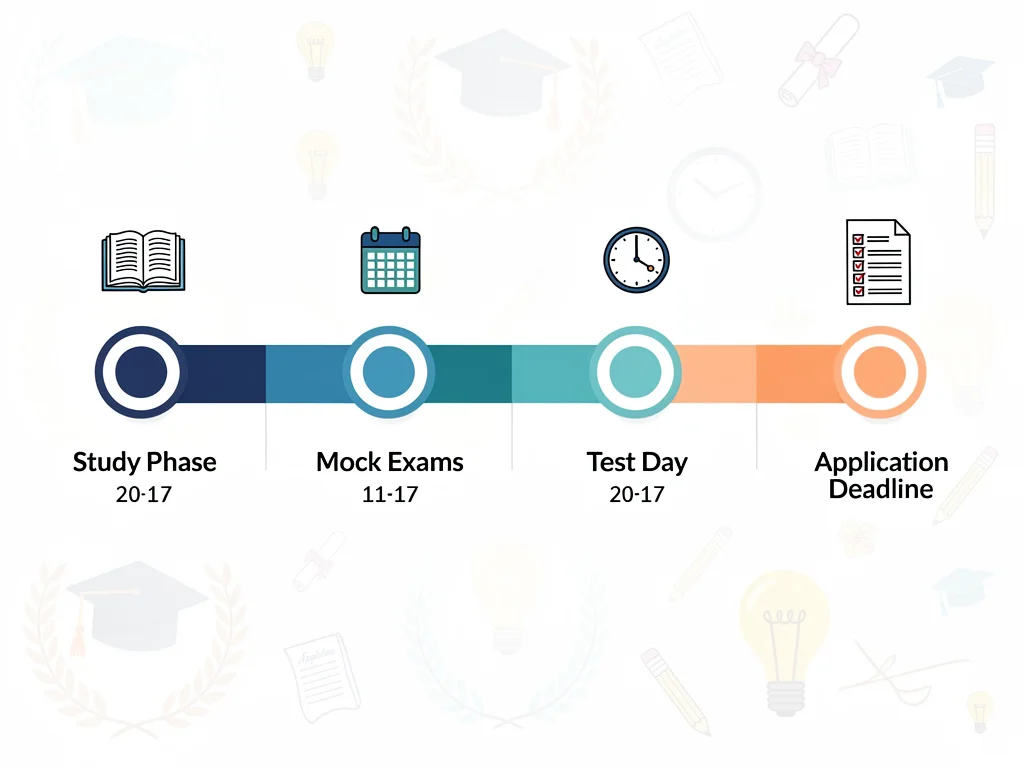
Effective preparation for the college entrance exams in 2026 demands a well-structured timeline. Procrastination is the enemy of success when it comes to these high-stakes tests. A strategic plan, ideally starting in your sophomore or early junior year, allows ample time for content review, practice, and retesting if necessary. This proactive approach alleviates stress and builds confidence.
Your timeline should be flexible but firm, incorporating various stages of preparation. It’s not just about cramming; it’s about consistent effort and gradual skill development. Think of it as a marathon, not a sprint, where steady progress leads to the best outcomes.
Sophomore year: foundational steps
- Initial Assessment: Take a diagnostic ACT and SAT practice test to establish a baseline score and identify areas for improvement.
- Skill Building: Focus on strengthening core academic skills in math, reading, and writing through your regular coursework.
- Resource Exploration: Begin researching available test preparation resources, including online platforms, books, and tutoring options.
As you move into your junior year, the intensity of your preparation will naturally increase. This is typically when most students take their first official ACT or SAT. Planning for this early allows for the possibility of a second attempt, which often yields higher scores as students become more familiar with the test environment and their own performance patterns.
The summer before your junior year can be an excellent time to dedicate more focused study hours, free from the pressures of daily schoolwork. This period allows for intensive review of challenging subjects and consolidation of test-taking strategies. Remember, consistency is key; even short, regular study sessions are more effective than sporadic cramming.
A well-thought-out preparation timeline is crucial for managing the demands of college entrance exams. By starting early and maintaining a consistent study schedule, you can systematically address weaknesses, reinforce strengths, and approach test day with assurance.
Strategic Study Techniques for Optimal Performance
Preparing for the college entrance exams in 2026 involves more than just reviewing academic content; it requires mastering strategic study techniques. These techniques help you not only understand the material but also apply it effectively under timed conditions. Developing strong test-taking skills can significantly boost your scores, regardless of your foundational knowledge.
One of the most effective strategies is active learning. Instead of passively reading textbooks or notes, engage with the material by summarizing, teaching it to someone else, or creating flashcards. This deeper engagement fosters better retention and understanding, which is vital for the multifaceted questions found on the ACT and SAT.
Leveraging practice tests and error analysis
Regularly taking full-length practice tests is non-negotiable. These simulations help you become comfortable with the test format, pacing, and question types. However, simply taking tests isn’t enough; the real learning happens in the analysis of your mistakes.
- Identify Patterns: Review incorrect answers to pinpoint recurring errors, whether they are content gaps, careless mistakes, or issues with understanding instructions.
- Understand ‘Why’: Don’t just note a wrong answer; delve into why it was incorrect and why the right answer is correct. This involves revisiting relevant concepts and strategies.
- Timed Practice: Mimic actual test conditions as closely as possible during practice, including strict time limits and minimal distractions.
Beyond practice tests, incorporating spaced repetition into your study routine can be highly beneficial. This method involves reviewing material at increasing intervals, which helps solidify information in your long-term memory. Utilize apps or create your own system for reviewing challenging vocabulary, math formulas, or grammar rules.
Furthermore, developing strong reading comprehension skills is paramount for both exams. Practice reading complex texts from various disciplines, focusing on identifying main ideas, supporting details, and author’s purpose. This will prepare you for the dense passages often found in the reading sections of the ACT and SAT.
Strategic study techniques are the bedrock of high performance on college entrance exams. By actively engaging with the material, meticulously analyzing practice test results, and employing effective memory and reading strategies, you can optimize your preparation and achieve your target scores.

Utilizing Digital Resources and Online Tools
In today’s digital age, a wealth of online resources and tools can significantly enhance your preparation for the college entrance exams in 2026. From official practice materials to adaptive learning platforms, these digital aids offer flexibility, personalized feedback, and extensive content to support your study efforts. Integrating them smartly into your routine can make a substantial difference.
The College Board (for SAT) and ACT.org (for ACT) are your primary sources for official practice tests and study guides. These materials are invaluable as they mirror the actual exam format and question styles more accurately than third-party resources. Always start with official materials to get a true sense of what to expect on test day.
Popular online platforms and their benefits
Beyond official sources, several reputable online platforms offer comprehensive test preparation. These platforms often provide diagnostic tests, video lessons, practice questions, and full-length simulations, often with detailed explanations for each answer.
- Khan Academy: Offers free, personalized practice for the SAT, including thousands of practice questions, video lessons, and full-length practice tests. It’s an excellent resource for targeted skill development.
- UWorld: Known for its extensive question bank and detailed explanations, UWorld provides realistic practice questions for both the ACT and SAT, helping students understand the reasoning behind correct and incorrect answers.
- Official ACT/SAT Websites: Provide free practice tests, sample questions, and valuable information about test dates, registration, and scoring.
Many online tools also leverage adaptive learning technology, which tailors the difficulty of questions based on your performance. This personalized approach ensures that you are consistently challenged in areas where you need improvement, making your study time more efficient and effective. Consider exploring platforms that offer this feature if you struggle with self-paced study.
Furthermore, online forums and study groups can provide a sense of community and support. Engaging with peers who are also preparing for the exams can offer new perspectives, motivation, and opportunities to clarify doubts. However, always ensure that the information shared is accurate and from reliable sources.
Digital resources and online tools are powerful allies in your college entrance exam preparation. By strategically choosing and integrating these platforms into your study plan, you can access high-quality content, receive personalized feedback, and practice effectively, ultimately leading to improved scores and greater confidence.
Managing Test Anxiety and Maintaining Well-being
The pressure associated with college entrance exams in 2026 can be immense, often leading to test anxiety. While a certain level of stress can be motivating, excessive anxiety can hinder performance. Therefore, learning effective strategies for managing stress and prioritizing your well-being is as crucial as academic preparation. A calm mind performs better.
Recognizing the signs of test anxiety is the first step. These can include physical symptoms like a racing heart or sweating, as well as mental blocks or negative self-talk. Once you identify these, you can employ techniques to counteract them, ensuring you approach test day with a clear and focused mindset.
Techniques for stress reduction and mental clarity
- Mindfulness and Breathing Exercises: Simple deep-breathing exercises can calm your nervous system. Practicing mindfulness regularly can help you stay present and reduce worrying about future outcomes.
- Adequate Sleep: Prioritize 7-9 hours of quality sleep, especially in the weeks leading up to the exam. A well-rested brain functions optimally.
- Balanced Diet and Exercise: Nourish your body with healthy foods and incorporate regular physical activity. Both contribute significantly to mental well-being and stress reduction.
Beyond these immediate techniques, developing a positive mindset and challenging negative thoughts are vital long-term strategies. Instead of dwelling on potential failures, focus on the progress you’ve made and the effort you’ve put in. Remind yourself that one test does not define your worth or your future.
It’s also beneficial to simulate test day conditions multiple times before the actual exam. This familiarization reduces the element of surprise and helps you feel more in control. Know your route to the test center, pack your essentials the night before, and ensure you have a good breakfast on the morning of the exam.
Maintaining your well-being and managing test anxiety are integral components of successful college entrance exam preparation. By adopting healthy habits, practicing stress-reduction techniques, and fostering a positive outlook, you can ensure that you perform at your peak potential when it matters most.
Score Reporting, Retesting, and College Applications
Once you’ve taken the college entrance exams in 2026, understanding how scores are reported, the benefits of retesting, and how these scores fit into your broader college application strategy becomes the next crucial phase. This knowledge empowers you to make strategic decisions about your scores and maximize your chances of admission.
Both the ACT and SAT allow you to send your scores to colleges directly. However, it’s important to understand each institution’s specific policies regarding score submission. Some colleges practice ‘superscoring,’ which means they will consider your highest section scores across multiple test dates to create a new, higher composite score. This policy can significantly benefit students who retest.
Navigating retesting decisions and score choice
Many students choose to take the ACT or SAT more than once, and often, retesting leads to improved scores. Familiarity with the test format and reduced anxiety from a previous attempt can contribute to better performance. Consider retesting if your initial score doesn’t reflect your full potential or if you believe you can improve specific sections.
- Understand Superscoring: Check if your target colleges superscore the ACT or SAT. If they do, retesting to improve a specific section can be highly advantageous without penalizing lower scores from other sections.
- Strategic Retake: Focus your study efforts on areas where you underperformed in your initial attempt. A targeted approach can lead to more significant score gains.
- Score Choice: Both tests offer ‘Score Choice’ options, allowing you to select which scores you send to colleges. Use this wisely, but be aware that some highly selective institutions prefer to see all your scores.
The role of ACT/SAT scores in college admissions varies widely among institutions. While some colleges are test-optional or test-blind, many still consider standardized test scores as an important piece of the application puzzle. Researching the specific requirements and preferences of your target schools is paramount.
Beyond the scores themselves, remember that your college application is a holistic representation of who you are. Strong essays, compelling extracurricular activities, and a robust academic transcript are equally vital. Standardized test scores are just one component, albeit an important one, of your overall profile.
Understanding score reporting, making informed decisions about retesting, and strategically integrating your scores into your college applications are critical steps after taking your exams. By being knowledgeable about these processes, you can present the strongest possible application to your desired institutions.
Beyond the Scores: Holistic Review and Your Application
While excelling in the college entrance exams in 2026 is undoubtedly important, it’s crucial to remember that these scores are just one piece of a much larger puzzle. US colleges, particularly selective ones, increasingly employ a holistic review process, evaluating applicants based on a wide array of factors beyond just test scores and GPA. Understanding this broader context can help you build a stronger, more compelling application.
Holistic review aims to assess your potential contribution to the college community, your intellectual curiosity, leadership qualities, and resilience. It seeks to understand who you are as a person, not just as a student defined by numbers. This approach means every part of your application holds weight, from your essays to your letters of recommendation.
Components of a strong college application
To stand out in a competitive applicant pool, focus on cultivating a well-rounded profile that showcases your unique strengths and passions. Each element of your application provides an opportunity to tell your story and demonstrate why you would be a valuable addition to a particular college.
- Academic Transcript: Your grades and the rigor of your coursework are foundational. Colleges look for consistent academic performance and a willingness to challenge yourself with advanced classes.
- Essays and Personal Statements: These are your chance to convey your personality, aspirations, and experiences in your own voice. Craft compelling narratives that reveal your character and intellectual depth.
- Extracurricular Activities: Participation in clubs, sports, volunteer work, or part-time jobs demonstrates your interests, commitment, leadership skills, and ability to balance multiple responsibilities. Quality often trumps quantity here.
- Letters of Recommendation: Strong letters from teachers and counselors who know you well can offer valuable insights into your character, work ethic, and contributions in the classroom.
Demonstrated interest in a particular college can also play a role. Engaging with admissions representatives, attending virtual information sessions, or even visiting campus (if possible) shows your genuine enthusiasm for the institution. This engagement can subtly influence admissions decisions, especially in competitive scenarios.
Furthermore, don’t underestimate the importance of your social media presence. Colleges increasingly review applicants’ online profiles. Ensure your digital footprint reflects positively on your character and maturity. A clean and professional online presence is an extension of your application.
Ultimately, a strong college application is a cohesive narrative that highlights your academic achievements, personal qualities, and future potential. By focusing on all components of the holistic review process, you can present a well-rounded and impressive profile that goes far beyond your standardized test scores.
| Key Aspect | Brief Description |
|---|---|
| ACT vs. SAT Choice | Understand core differences and take practice tests to choose the best fit for your strengths. |
| Preparation Timeline | Start early (sophomore year) with diagnostics, skill-building, and consistent study. |
| Strategic Study | Utilize active learning, practice tests, error analysis, and spaced repetition for retention. |
| Well-being | Manage test anxiety with sleep, diet, exercise, and mindfulness to optimize performance. |
Frequently Asked Questions About 2026 College Entrance Exams
Ideally, students should begin foundational preparation in their sophomore year, focusing on core academic skills. More intensive, test-specific study and practice tests should commence in the junior year to allow for potential retesting and score improvement.
It’s generally recommended to take a full-length practice test for both the ACT and SAT to determine which format and content better suit your strengths. You can then focus your preparation on the test where you naturally perform better, or take both if desired.
Their importance varies by college. While many institutions are test-optional or test-blind, others still value strong scores. Research the specific policies of your target schools, but remember that scores are just one part of a holistic application review.
Yes, many students see score improvements on a second attempt. Familiarity with the test format, reduced anxiety, and targeted study based on previous results often contribute to higher scores. Check college superscoring policies to maximize this benefit.
Khan Academy offers free, personalized SAT practice. The official College Board and ACT websites provide free practice tests and study guides. These platforms are excellent starting points for comprehensive and reliable preparation materials.
Conclusion
Preparing for college entrance exams in 2026 is a significant undertaking for any US student, but with a strategic approach, it can be a manageable and even empowering journey. By understanding the nuances of the ACT and SAT, establishing a well-paced timeline, employing effective study techniques, leveraging digital resources, and prioritizing your well-being, you can approach these tests with confidence. Remember that these scores, while important, are part of a larger, holistic college application that showcases your unique talents and potential. Focus on consistent effort, smart preparation, and presenting your best self to open the doors to your academic future.