REITs 2026: Guide to a 6% Dividend Yield
Anúncios
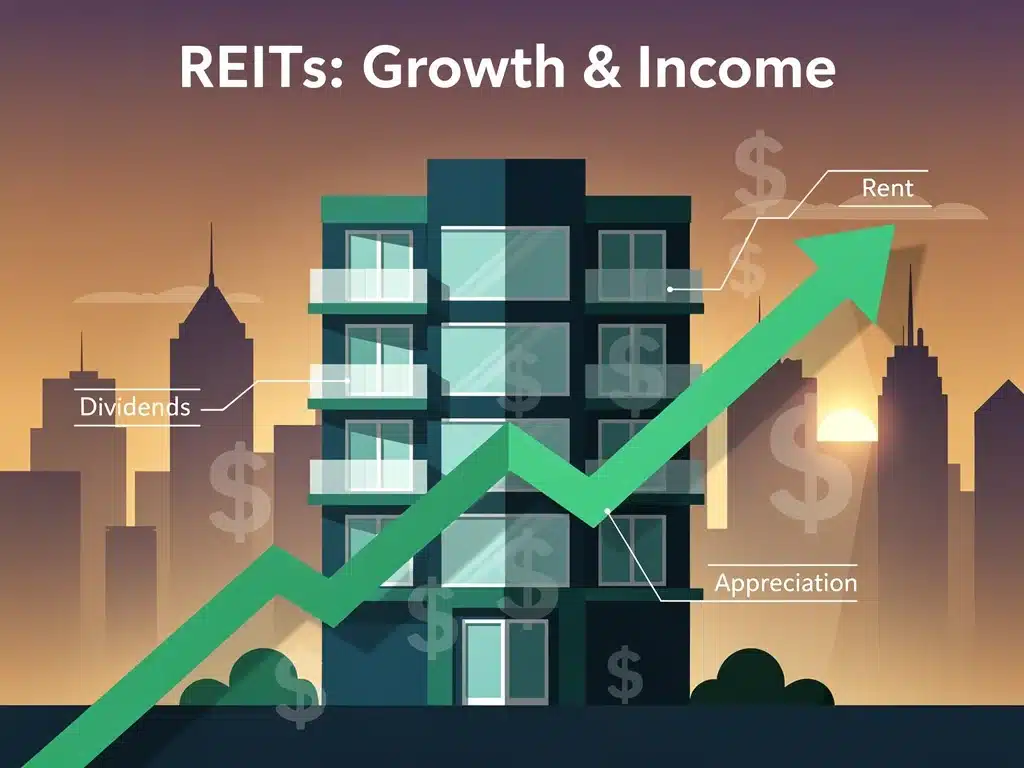
Real Estate Investment Trusts (REITs) in 2026 provide an accessible pathway for investors to achieve a 6% dividend yield by owning shares in companies that manage income-producing real estate across various sectors.
As we approach 2026, the landscape of investment opportunities continues to evolve, presenting both challenges and exciting prospects for those looking to grow their wealth. Among the most compelling options for income-focused investors are Real Estate Investment Trusts (REITs) in 2026: A Guide to Generating a 6% Dividend Yield. These unique investment vehicles offer a practical way to participate in the real estate market without the complexities of direct property ownership, promising attractive returns, especially for those targeting a consistent dividend income. This guide will delve into how REITs function, what to consider for 2026, and actionable strategies to help you aim for that coveted 6% dividend yield.
Anúncios
Understanding REITs: The Foundation of Real Estate Investing
Real Estate Investment Trusts, or REITs, are companies that own, operate, or finance income-producing real estate. Modeled after mutual funds, they allow individual investors to buy shares in commercial real estate portfolios, which can include everything from apartment complexes and data centers to retail spaces and healthcare facilities. This structure makes large-scale, income-generating real estate accessible to everyone, not just institutional investors.
The core appeal of REITs lies in their legal requirement to distribute at least 90% of their taxable income to shareholders annually in the form of dividends. This mandate is what makes them particularly attractive to income-seeking investors. Unlike traditional real estate investments, REITs offer liquidity, allowing investors to buy and sell shares on major stock exchanges with ease, much like any other publicly traded company.
Anúncios
What Defines a REIT?
For a company to qualify as a REIT, it must meet several specific criteria set by the IRS. These criteria ensure that REITs primarily focus on real estate activities and distribute most of their earnings to shareholders, preventing them from retaining profits like typical corporations. This strict structure is fundamental to their identity and their dividend-paying nature.
- Asset Test: At least 75% of the REIT’s total assets must be real estate assets, cash, or U.S. government securities.
- Income Test: At least 75% of the REIT’s gross income must be derived from rents from real property, interest on mortgages financing real property, or sales of real property.
- Distribution Test: REITs must distribute at least 90% of their taxable income to shareholders annually.
Understanding these foundational aspects of REITs is crucial for any investor looking to incorporate them into their portfolio. Their unique structure and regulatory requirements are what differentiate them from other investment vehicles and underpin their potential for consistent income generation.
The Current Landscape for REITs in 2026
As we look towards 2026, several macroeconomic factors and industry trends are shaping the performance and prospects of REITs. Interest rates, inflation, economic growth, and demographic shifts all play a significant role in how different real estate sectors will perform. Investors aiming for a 6% dividend yield need to be acutely aware of these dynamics to make informed decisions.
The post-pandemic economy has seen a re-evaluation of real estate usage, with certain sectors experiencing significant tailwinds while others face headwinds. For instance, the demand for industrial and logistics properties continues to be strong due to the growth of e-commerce, while traditional office spaces are still adapting to hybrid work models. Healthcare and data center REITs also show resilience and growth potential.
Key Economic Factors Influencing REITs
The economic environment in 2026 will undoubtedly impact REIT performance. Interest rates, in particular, are a critical factor, as they affect borrowing costs for REITs and the attractiveness of their dividends compared to other fixed-income investments. A stable or declining interest rate environment could be favorable for REITs, making their debt cheaper and their dividends more appealing.
- Interest Rates: Higher rates can increase borrowing costs for REITs and make their dividends less competitive against bonds.
- Inflation: Real estate often acts as an inflation hedge, as property values and rents tend to rise with inflation, benefiting REITs.
- Economic Growth: A robust economy generally leads to higher demand for various property types, boosting occupancy rates and rental income.
Furthermore, technological advancements are continually reshaping how real estate is used. The rise of artificial intelligence and automation could further drive demand for specialized data centers and logistics hubs, creating new opportunities for REITs in these niches. Conversely, changes in consumer behavior and retail trends might necessitate adaptation for retail REITs.
Navigating the 2026 landscape for REITs requires a keen understanding of these overarching economic and sectoral trends. Investors who can identify sectors poised for growth and those facing challenges will be better positioned to select REITs that offer stable income and capital appreciation, ultimately contributing to the goal of a 6% dividend yield.
Strategies for Achieving a 6% Dividend Yield with REITs
Achieving a specific dividend yield, such as 6%, with REITs requires a strategic approach that balances income generation with risk management. It’s not simply about chasing the highest yields, which can sometimes indicate underlying financial distress. Instead, a thoughtful selection process, diversification, and continuous monitoring are essential.
One primary strategy involves focusing on REITs with a proven track record of consistent dividend payments and growth. Historical performance, while not a guarantee of future results, can offer insights into a REIT’s financial health and management quality. Looking for REITs that have steadily increased their dividends over time, rather than those with volatile payout histories, is often a wise approach.
Diversification Across REIT Sectors
To mitigate risk and enhance the likelihood of achieving a 6% yield, diversification across different REIT sectors is paramount. Relying too heavily on one type of real estate can expose your portfolio to specific industry downturns. Spreading investments across various sectors can help stabilize overall returns.
- Industrial REITs: Benefiting from e-commerce growth and logistics demand.
- Healthcare REITs: Driven by an aging population and increasing demand for medical facilities.
- Data Center REITs: Fueled by digital transformation and cloud computing needs.
- Residential REITs: Providing stable income from apartment rentals, influenced by population growth and housing affordability.
Another crucial element is thorough due diligence. This involves researching a REIT’s financial statements, management team, property portfolio, and market positioning. Key metrics such as Funds From Operations (FFO) and Adjusted Funds From Operations (AFFO) are more indicative of a REIT’s operational cash flow and ability to pay dividends than traditional earnings per share (EPS).

Furthermore, consider the REIT’s debt levels and its ability to service that debt. High debt can be a red flag, especially in a rising interest rate environment. A healthy balance sheet indicates a REIT’s capacity to weather economic downturns and continue its dividend distributions. By combining these strategies, investors can build a robust REIT portfolio aimed at generating a sustainable 6% dividend yield.
Identifying High-Quality REITs for a Stable 6% Yield
The pursuit of a 6% dividend yield should not come at the expense of quality. High-quality REITs are characterized by strong balance sheets, experienced management teams, diversified property portfolios, and properties located in desirable markets with high occupancy rates. These attributes contribute to consistent rental income and, consequently, reliable dividend payments.
When evaluating potential REITs, look beyond just the dividend yield percentage. A very high yield could sometimes signal that the market perceives the dividend as unsustainable, leading to a depressed stock price. Instead, focus on REITs with a sustainable payout ratio, meaning they are not distributing an excessively large portion of the FFO as dividends, leaving room for reinvestment and growth.
Key Metrics for REIT Evaluation
Several financial metrics are particularly useful for assessing the quality and sustainability of a REIT’s dividends. Familiarity with these metrics can significantly enhance your ability to identify promising investments.
- Funds From Operations (FFO): A measure of a REIT’s cash flow from operations, often considered a better indicator of profitability than net income.
- Adjusted Funds From Operations (AFFO): FFO adjusted for recurring capital expenditures, providing an even clearer picture of distributable cash flow.
- Debt-to-EBITDA: A leverage ratio indicating how many years it would take for a company to pay back its debt if net earnings remained constant. Lower is generally better.
- Occupancy Rate: The percentage of available space that is currently leased. High occupancy rates indicate strong demand for the REIT’s properties.
Moreover, consider the geographical diversification of the REIT’s properties. REITs with properties spread across different regions or even internationally can be more resilient to localized economic downturns. Market analysis, including population growth, employment trends, and infrastructure development in the areas where a REIT operates, can also provide valuable insights.
Ultimately, identifying high-quality REITs for a stable 6% yield involves a comprehensive analysis that goes beyond superficial metrics. It requires understanding the underlying real estate assets, the management’s strategy, and the broader economic environment to ensure the chosen REITs have the financial strength and operational efficiency to sustain their distributions.
Tax Implications and Portfolio Integration of REITs
Investing in REITs, particularly for dividend income, comes with specific tax considerations that investors in the United States need to understand. Unlike qualified dividends from regular corporations, REIT dividends are generally taxed as ordinary income, which can be at a higher rate. However, there are nuances and potential deductions that can influence the net return on your investment.
For individuals, up to 20% of qualified REIT dividends may be deductible under Section 199A of the Tax Cuts and Jobs Act of 2017, subject to certain income limitations. This deduction can significantly reduce the effective tax rate on REIT income, making them more attractive. It’s crucial to consult with a tax professional to understand how these rules apply to your specific financial situation.
Optimizing REITs in Different Account Types
The type of investment account you use for REITs can also have a substantial impact on your after-tax returns. Placing REITs in tax-advantaged accounts can be a highly effective strategy to maximize your dividend yield.
- Retirement Accounts (e.g., IRA, 401(k)): Investing in REITs within a Roth IRA allows for tax-free withdrawals in retirement, including dividend income. In a traditional IRA or 401(k), taxes are deferred until withdrawal, which can be advantageous.
- Taxable Accounts: While REIT dividends are taxed as ordinary income, the 199A deduction can mitigate some of this impact. However, investors should be mindful of the higher tax burden compared to qualified dividends.
Integrating REITs into a broader investment portfolio also requires careful consideration. They offer diversification benefits due to their low correlation with other asset classes like stocks and bonds. This means that when other parts of your portfolio might be underperforming, your REIT holdings could provide stability and income.

The goal is to create a balanced portfolio where REITs complement your existing holdings, contributing to overall portfolio resilience and income generation. Understanding the tax implications and strategically placing REITs within your account structure are vital steps for any investor aiming to effectively generate a 6% dividend yield while optimizing their net returns.
Risks and Challenges in REIT Investing for 2026
While REITs offer attractive income potential and diversification benefits, it’s important to acknowledge the inherent risks and challenges associated with them, especially when targeting a specific yield like 6% in 2026. No investment is without risk, and REITs are subject to various market, economic, and specific real estate sector risks.
One significant risk is interest rate sensitivity. As discussed, rising interest rates can increase a REIT’s borrowing costs, potentially impacting profitability and dividend sustainability. Higher rates also make other fixed-income investments, such as bonds, more competitive, potentially reducing demand for REIT shares and putting downward pressure on their prices.
Sector-Specific Risks and Economic Downturns
Different REIT sectors face unique challenges. For example, retail REITs are vulnerable to shifts in consumer spending habits and the continued growth of e-commerce. Office REITs grapple with the long-term implications of remote and hybrid work models. Understanding these sector-specific risks is crucial for prudent investment.
- Economic Recessions: Downturns can lead to reduced demand for commercial space, lower occupancy rates, and decreased rental income.
- Property Valuation: Real estate values can fluctuate, impacting the net asset value of REITs.
- Tenant Concentration Risk: Over-reliance on a few large tenants can expose a REIT to significant risk if those tenants default or vacate.
- Management Quality: Poor management decisions, such as overleveraging or unwise acquisitions, can negatively impact a REIT’s performance.
Moreover, liquidity, while generally higher than direct property ownership, is still a factor. In times of market stress, REIT share prices can become volatile, and selling shares might occur at unfavorable prices. This is particularly relevant for investors who might need to access their capital quickly.
It’s also important to consider the potential for dividend cuts. While REITs are legally required to distribute a high percentage of their income, they are not immune to financial difficulties that could necessitate a reduction in their dividend payments. Monitoring the REIT’s financial health and payout ratio can help identify these risks early.
Successfully navigating the REIT market in 2026 to achieve a 6% dividend yield requires a realistic assessment of these risks and challenges. Diversification, thorough due diligence, and a long-term investment horizon can help mitigate some of these potential downsides, allowing investors to pursue their income goals more confidently.
Future Outlook: REITs Beyond 2026
Looking beyond 2026, the long-term prospects for REITs remain compelling, driven by fundamental demographic trends, technological advancements, and evolving real estate needs. While short-term market fluctuations are inevitable, the underlying demand for various types of income-producing properties is expected to persist and grow, supporting the continued relevance of REITs in investment portfolios.
Urbanization trends, particularly in emerging markets, will continue to drive demand for residential, retail, and office spaces. Meanwhile, in developed economies, specialized real estate sectors like data centers, cell towers, and infrastructure REITs are poised for sustained growth as digital transformation accelerates and connectivity becomes even more critical.
Emerging Trends Shaping the Future of Real Estate
Several key trends are expected to shape the real estate landscape and, consequently, the performance of REITs in the years following 2026. Investors should keep these in mind when considering long-term allocations.
- Sustainability and ESG: Growing emphasis on environmentally friendly and socially responsible properties will drive investment into green buildings and sustainable infrastructure.
- Technological Integration: Smart buildings, IoT devices, and AI-powered property management systems will become standard, enhancing efficiency and value.
- Healthcare Demands: An aging global population will continue to fuel demand for medical office buildings, senior living facilities, and specialized healthcare properties.
- E-commerce Evolution: The logistics and industrial sector will continue to adapt to new e-commerce fulfillment models, including last-mile delivery and automated warehouses.
The adaptability of REITs to these changing dynamics will be crucial for their long-term success. REITs that invest in flexible, technologically advanced, and strategically located properties are likely to outperform. Furthermore, the ability of REIT management teams to identify and capitalize on these emerging trends will be a key differentiator.
For investors focused on income, the future of REITs suggests a continued opportunity for attractive dividend yields, provided they remain vigilant to market changes and select REITs with robust business models and forward-thinking strategies. The ability of REITs to provide diversification, liquidity, and inflation protection ensures their enduring appeal as a core component of a well-rounded investment strategy well beyond 2026.
| Key Point | Brief Description |
|---|---|
| REIT Structure | Companies owning income-producing real estate, distributing 90%+ taxable income as dividends. |
| 2026 Market Dynamics | Influenced by interest rates, inflation, economic growth, and sectoral shifts (e.g., industrial, data centers). |
| Achieving 6% Yield | Requires diversification across sectors, strong financials, and sustainable payout ratios. |
| Tax Considerations | Dividends generally taxed as ordinary income, potential 199A deduction; optimize with tax-advantaged accounts. |
Frequently Asked Questions About REITs and Dividend Yields
A REIT (Real Estate Investment Trust) is a company that owns, operates, or finances income-generating real estate. It generates income primarily through rents from its diverse portfolio of properties, which can include apartments, offices, retail spaces, and industrial facilities. This income is then largely distributed to shareholders as dividends.
REITs are legally required to distribute at least 90% of their taxable income to shareholders annually. This mandate, in exchange for certain tax exemptions at the corporate level, ensures that a significant portion of their earnings flows directly to investors, often resulting in higher dividend yields compared to many other types of companies.
Key risks include interest rate sensitivity, as rising rates can increase borrowing costs and make dividends less attractive. Economic downturns can also reduce property demand and rental income. Additionally, sector-specific risks, such as changes in retail trends or office occupancy, can impact performance.
Evaluate a REIT’s financial health by examining metrics like Funds From Operations (FFO) and Adjusted Funds From Operations (AFFO), which indicate cash flow. Also, check the payout ratio (dividends per share relative to FFO/AFFO), debt levels, and occupancy rates to assess dividend sustainability and operational efficiency.
Yes, most REIT dividends are taxed as ordinary income, which can be at a higher rate than qualified dividends from regular corporations. However, a potential 20% deduction for qualified business income (Section 199A) may apply, reducing the effective tax rate. Consider holding REITs in tax-advantaged accounts for optimal tax efficiency.
Conclusion
Investing in Real Estate Investment Trusts (REITs) in 2026 offers a promising pathway for investors seeking to generate a substantial 6% dividend yield, combining the benefits of real estate ownership with the liquidity of publicly traded stocks. However, achieving this goal requires more than simply chasing high-yielding opportunities; it demands a nuanced understanding of market dynamics, diligent selection of high-quality REITs, and strategic portfolio management. By diversifying across various sectors, focusing on strong financial metrics like FFO and AFFO, and understanding the tax implications, investors can position themselves to capitalize on the enduring income potential that REITs provide. As the real estate landscape continues to evolve, staying informed and adaptable will be key to long-term success and consistent dividend income.