Student Loan Forgiveness 2026: Pathways to Reduce Debt
Anúncios
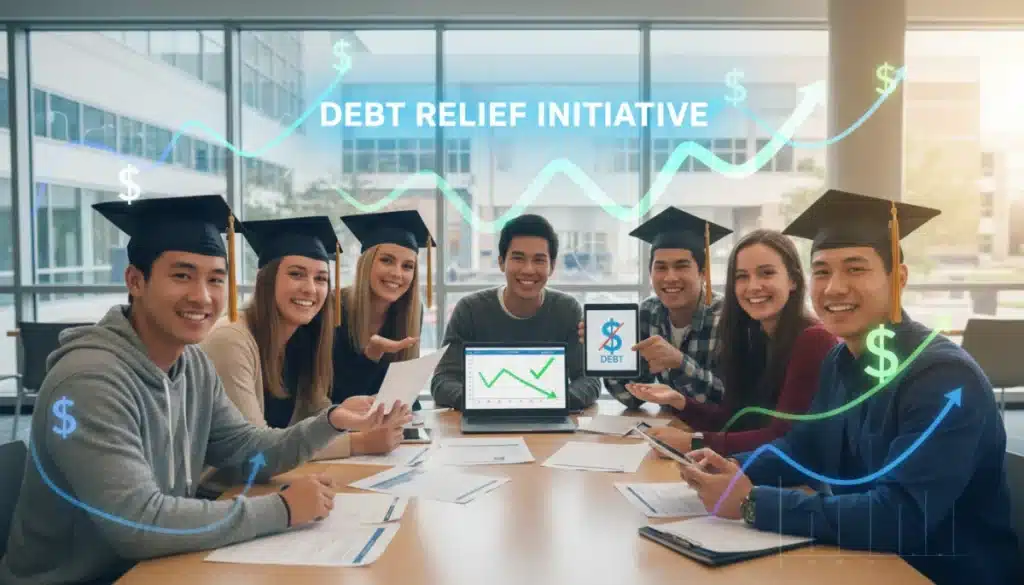
Student loan forgiveness 2026 offers diverse avenues for borrowers to reduce their educational debt, encompassing existing federal programs and potential new initiatives focusing on public service, income-driven repayment, and specific professional fields.
Navigating the complex world of student loan debt can be daunting, but understanding the options available for student loan forgiveness 2026 is crucial for millions of Americans. As we look ahead, the landscape of educational debt relief continues to evolve, bringing both established programs and potential new pathways designed to ease the financial burden on borrowers. This article will delve into the current programs, anticipated changes, and strategic approaches you can take to significantly reduce your educational debt.
Anúncios
Understanding the Current Landscape of Student Loan Forgiveness Programs
In 2026, several key federal programs remain pillars of student loan forgiveness. These programs cater to different demographics and professional paths, offering relief to those who meet specific criteria. It’s essential to differentiate between loan discharge, cancellation, and forgiveness, as each has distinct implications for your debt.
Loan forgiveness specifically refers to the cancellation of a portion or all of your federal student loan debt under certain conditions. This is often tied to employment in public service, teaching, or other critical fields, or after a period of satisfactory repayment under an income-driven plan.
Anúncios
Public Service Loan Forgiveness (PSLF)
The Public Service Loan Forgiveness program is a cornerstone for many seeking debt relief. It is designed to encourage individuals to work in public service jobs. Eligibility hinges on several factors:
- Employment by a U.S. federal, state, local, or tribal government or a non-profit organization.
- Having Direct Loans or consolidating other federal loans into a Direct Loan.
- Making 120 qualifying monthly payments under a qualifying repayment plan.
The PSLF program has seen significant attention and some reforms in recent years, aiming to streamline the process and make it more accessible. Borrowers should regularly certify their employment to ensure their payments are counted towards the 120-payment threshold. The potential for future adjustments to PSLF remains a hot topic, with ongoing discussions about expanding its reach or simplifying its requirements further.
For those dedicating their careers to public service, PSLF can offer complete forgiveness of their remaining federal student loan balance after a decade of qualifying payments. This makes it an incredibly powerful tool for debt reduction, especially for individuals in lower-paying public service roles.
Income-Driven Repayment (IDR) Plans and Forgiveness
Income-Driven Repayment (IDR) plans are another vital pathway to student loan forgiveness 2026. These plans adjust your monthly loan payments based on your income and family size, making them more affordable. After a certain period of payments, typically 20 or 25 years, any remaining balance on your federal student loans is forgiven.
Types of IDR Plans
There are several IDR plans, each with slightly different terms and conditions:
- SAVE Plan (Saving on a Valuable Education Plan): This newer plan often offers the lowest monthly payments and can provide a faster path to forgiveness for some borrowers, particularly those with undergraduate loans.
- Pay As You Earn (PAYE): Payments are generally 10% of your discretionary income, and forgiveness occurs after 20 years.
- Income-Based Repayment (IBR): Payments are 10% or 15% of discretionary income, with forgiveness after 20 or 25 years.
- Income-Contingent Repayment (ICR): Payments are either 20% of discretionary income or what you would pay on a fixed 12-year payment plan, whichever is less, with forgiveness after 25 years.
The SAVE Plan, in particular, represents a significant shift in IDR options, potentially offering more generous terms for many borrowers. It’s designed to prevent interest capitalization in certain scenarios and can lead to a zero-dollar payment for those with lower incomes. Understanding which IDR plan best suits your financial situation is paramount to maximizing your potential for forgiveness.
The duration until forgiveness under IDR plans can feel long, but the benefit of manageable payments and eventual debt cancellation provides a crucial safety net for borrowers facing financial hardship or pursuing careers with modest incomes. Regularly recertifying your income and family size is essential to keep your payments accurate and on track for forgiveness.
Teacher Loan Forgiveness and Other Professional Pathways
Beyond PSLF and IDR, specific professions offer dedicated loan forgiveness programs. Teachers, healthcare professionals, and those in other critical fields often have unique opportunities to reduce their student loan burden, recognizing their vital contributions to society.
Teacher Loan Forgiveness (TLF)
The Teacher Loan Forgiveness program is designed to encourage individuals to enter and remain in the teaching profession, particularly in low-income schools. Teachers who work full-time for five consecutive years in a low-income school or educational service agency may be eligible for forgiveness of up to $17,500 on their Direct Subsidized and Unsubsidized Loans.
Eligibility for TLF depends on the subject taught and the level of need at the school. Highly qualified elementary and secondary school teachers are typically eligible. It’s important to note that you cannot receive both PSLF and TLF for the same period of service, so choosing the most beneficial program is key.
Loan Forgiveness for Healthcare Professionals
Healthcare professionals, especially those in underserved areas, have several federal and state-specific programs available. These often include:
- National Health Service Corps (NHSC) Loan Repayment Program: Offers significant loan repayment for health professionals who commit to working in underserved communities.
- Nurses Loan Forgiveness: Various programs exist at the federal and state level for registered nurses and nursing faculty.
- Physician Loan Repayment Programs: Many states offer programs to attract doctors to rural or low-income areas.
These professional-specific forgiveness options are a testament to the recognized need for skilled workers in these critical sectors. They provide a powerful incentive for individuals to pursue careers that directly benefit communities, while also alleviating personal financial stress. Researching state-specific programs is also highly recommended, as they can often complement federal initiatives.
Potential New Pathways and Future Outlook for 2026
The political and economic climate surrounding student loan debt is dynamic, leading to ongoing discussions about new pathways for forgiveness and potential reforms. While specifics for 2026 are still evolving, several areas are under consideration that could significantly impact borrowers.
One major area of discussion revolves around broader, more automatic forgiveness initiatives. While large-scale universal forgiveness has faced legal challenges, targeted approaches continue to be debated. These could include forgiveness for borrowers who have been in repayment for an extended period, or for those who initially borrowed smaller amounts and have struggled to make progress on their debt.
Executive Actions and Legislative Proposals
The executive branch has shown a willingness to use existing authority to provide relief, often through adjustments to current programs or targeted discharges. Legislative proposals, while often slow-moving, could introduce new laws that create entirely new forgiveness categories or expand existing ones. These proposals often focus on:
- Simplifying the application process for existing programs.
- Expanding eligibility criteria for certain forgiveness types.
- Addressing the issue of interest capitalization and its impact on loan balances.
Borrowers should stay informed about legislative developments and any official announcements from the Department of Education. Changes can happen rapidly, and being aware of new opportunities can make a substantial difference in your debt repayment journey. The political will to address student debt remains strong, suggesting that new avenues for relief are always a possibility.
Navigating Eligibility and Application Processes
Understanding the eligibility requirements and correctly navigating the application process are critical steps to securing student loan forgiveness 2026. Each program has specific criteria, and a misstep can delay or even disqualify your application. It’s not enough to simply qualify; you must also diligently complete all necessary paperwork and meet deadlines.
For most federal programs, the first step involves ensuring your loans are federal Direct Loans. If you have older federal loans, like FFEL Program loans, you might need to consolidate them into a Direct Consolidation Loan to become eligible for certain forgiveness benefits, such as PSLF or specific IDR plans. However, consolidation can sometimes reset your payment count for forgiveness, so it’s crucial to research thoroughly or consult with a loan servicer before proceeding.
Key Application Steps and Tips
Applying for forgiveness often involves:
- Identifying the Right Program: Match your situation (profession, income, loan type) with the most suitable forgiveness program.
- Gathering Documentation: This typically includes proof of employment, income, and family size.
- Submitting Forms: Completing and submitting the correct application forms to your loan servicer or the Department of Education.
- Tracking Progress: For programs like PSLF, regularly certifying your employment and tracking your qualifying payments is essential.
Many borrowers find the application process complex, leading to frustration. Utilizing resources provided by the Department of Education, non-profit organizations, and your loan servicer can be invaluable. Being proactive, organized, and persistent will significantly increase your chances of successfully obtaining student loan forgiveness. Don’t hesitate to seek clarification if any part of the process is unclear.
Strategic Approaches to Reduce Your Debt Burden
Beyond direct forgiveness programs, there are several strategic approaches borrowers can take to reduce their overall student loan debt burden. These strategies often work in conjunction with forgiveness programs or provide alternatives for those who don’t qualify for full forgiveness.
One common strategy is refinancing private student loans. While federal loans offer protections and forgiveness options, private loans generally do not. Refinancing private loans can lead to lower interest rates or more favorable payment terms, especially if your credit score has improved since you first took out the loans. However, refinancing federal loans into private ones means sacrificing federal benefits, including access to IDR plans and forgiveness, so this decision should be made with extreme caution.
Smart Repayment and Financial Planning
Consider these additional strategies:
- Aggressive Repayment: If your financial situation allows, making extra payments or paying more than the minimum can significantly reduce the total interest paid and shorten your repayment period.
- Budgeting and Expense Reduction: Freeing up more money each month can be channeled towards your student loans, accelerating your path to debt freedom.
- Emergency Fund: Building an emergency fund prevents you from needing to defer payments or accrue more interest during unexpected financial hardships.
- Tax Benefits: Don’t forget about potential tax deductions for student loan interest paid, which can offer some relief during tax season.
A holistic approach to managing your finances, combining smart repayment strategies with an awareness of available forgiveness options, provides the most robust path to reducing your educational debt. Regularly reviewing your financial situation and adapting your strategy as needed will be key to long-term success. The goal is not just to pay off debt, but to do so in the most efficient and financially sound way possible.
| Key Program | Brief Description |
|---|---|
| PSLF | Forgiveness for public service employees after 120 qualifying payments. |
| IDR Plans | Payments based on income, with remaining balance forgiven after 20-25 years. |
| Teacher Loan Forgiveness | Up to $17,500 for teachers in low-income schools after five years of service. |
| NHSC Loan Repayment | Loan repayment for healthcare professionals in underserved communities. |
Frequently Asked Questions About Student Loan Forgiveness 2026
The primary federal programs include Public Service Loan Forgiveness (PSLF) for government and non-profit employees, and Income-Driven Repayment (IDR) plans like the SAVE Plan, which offer forgiveness after 20-25 years of payments based on income. Teacher Loan Forgiveness also assists educators in specific schools.
The SAVE Plan generally offers lower monthly payments, especially for undergraduate loans, and prevents unpaid interest from capitalizing, meaning your loan balance won’t grow as long as you make your reduced payments. It’s designed to be more affordable and efficient for many borrowers compared to older IDR plans.
No, you cannot receive both PSLF and Teacher Loan Forgiveness for the same period of service. If you qualify for both, you will need to choose which program provides the greatest benefit based on your specific loan types and the amount of forgiveness you are eligible for under each program.
If you have older federal loans such as FFEL Program loans, you may need to consolidate them into a Direct Consolidation Loan to become eligible for certain federal forgiveness programs, including PSLF and some IDR plans. Always consult your loan servicer before consolidating to understand the implications.
While specific new programs are always subject to legislative and executive decisions, discussions continue regarding broader forgiveness initiatives and reforms to existing programs. Borrowers should stay updated with announcements from the Department of Education as changes and new opportunities can emerge.
Conclusion
The journey to alleviate student loan debt is multifaceted, with student loan forgiveness 2026 offering critical lifelines for many. From well-established programs like PSLF and the evolving landscape of IDR plans, to professional-specific options for teachers and healthcare workers, there are numerous avenues to explore. Staying informed about eligibility requirements, diligently navigating application processes, and adopting strategic financial planning are all essential steps. As policies continue to adapt, proactive engagement and understanding the available resources will empower borrowers to significantly reduce their educational debt burden and move towards a more secure financial future.